A Destiny 2 Player’s View of Bungie’s $13.5 Million Cheat-Maker Settlement
Bungie’s $13.5M Elite Boss Tech settlement over Destiny 2 cheats shows cheat sellers face real legal costs.
From my couch in 2026, the $13.5 million settlement between Bungie and Elite Boss Tech still feels like a strange kind of victory bell: not the end of a war, but a clear note that the fight is real. I am an ordinary Destiny 2 player, not a lawyer or a developer, but I have spent enough evenings in the Crucible and enough nights chasing loot to understand what cheats do to a game’s trust. They turn a shared hobby into a suspicious audit of every kill feed. So when a cheat seller finally admits wrongdoing and agrees to pay, I pay attention.
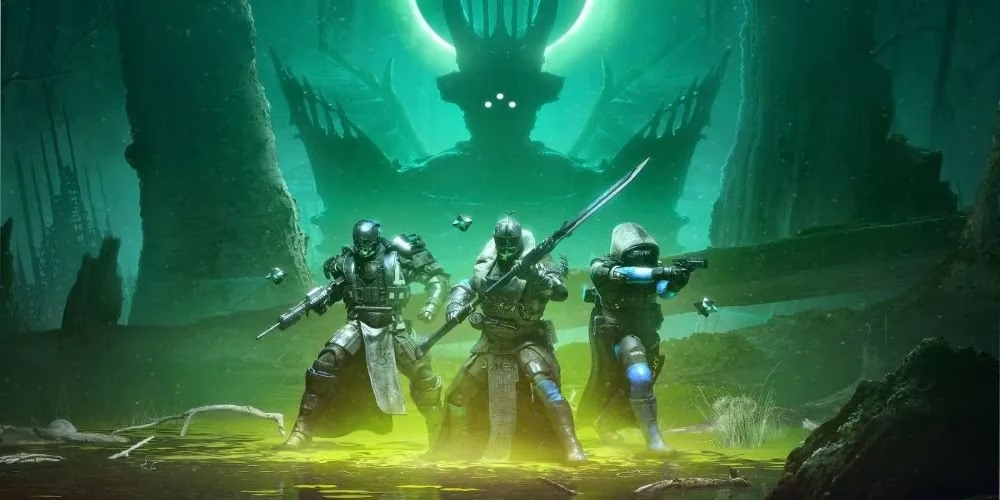
The case against Elite Boss Tech was straightforward on paper and ugly in practice. The company sold Destiny 2 cheats on its website, and when Bungie noticed, the lawsuit followed. Robert James Duthie Nelson, the owner of Elite Boss Tech, and others involved eventually admitted the charges against them. They admitted that they willfully circumvented Destiny 2’s technological measures, which directly violated the DMCA’s anti-circumvention provisions. They also admitted that the cheats added a graphical overlay that was integrated into Destiny 2’s copyrighted code, creating unlicensed derivative work. That second admission matters to me because it reframes cheating as more than rude behavior in a lobby. It becomes a commercial intrusion into someone else’s creative work.
The math in the case is almost absurdly clean. The cheat software was downloaded 6,765 times. Each download counted as a separate violation of the anti-circumvention provisions, and the cheat maker was charged $2,000 per violation. That comes to $13,530,000. The settlement figure of $13.5 million is therefore not a random number pulled from a hat; it is a receipt for thousands of tiny acts of circumvention stacked into one very expensive pile.
| Detail | What it means to me |
|---|---|
| 💰 $13.5 million settlement | A cheat seller admitted fault and agreed to pay a serious price |
| 📥 6,765 downloads | Each download became a separate violation in the case |
| ⚖️ $2,000 per violation | The total reached $13,530,000 |
| 🧩 Graphical overlay | The cheat integrated into copyrighted code and created unlicensed derivative work |
| 🚫 No more infringement | Elite Boss Tech agreed to refrain from infringing Bungie’s copyrighted material again |
The cheat market often behaves like a hydra wearing a trench coat: cut off one head, and three more pretend they were never part of the same body. That is why this admission feels different from a simple ban wave. A ban wave removes accounts. A settlement removes the comfortable fiction that cheat selling is a harmless side hustle run by untouchable ghosts. Bungie’s legal campaign has felt less like a single hammer blow and more like a jeweler’s saw cutting through a padlock—slow, precise, and expensive. The $13.5 million result is one of the clearest signs that the saw is reaching something solid.
I also remember the context around this win. Bungie had recently seen a court dismiss its claims against one hack provider, AimJunkies, owned by Phoenix Digital Group. That dismissal did not erase the wider fight, but it showed how messy and uneven legal battles against cheat makers can be. The Elite Boss Tech settlement bolstered Bungie’s position. It also fit a broader pattern: Bungie has teamed up with Riot and Ubisoft to fight cheat software developers, because the cheat market is not a Destiny 2 problem alone. It is an industry problem with shared tools, shared customers, and shared excuses.
On the game side, Bungie incorporated BattlEye anti-cheat into Destiny 2 to counter hackers ruining the experience for everyone. From my perspective, that has been fairly successful in PvP: hacker reports have reduced, and matches feel less like a coin flip against a wallhacker. But BattlEye is a lighthouse, not a fortress. It warns and narrows the path, but it cannot stop every ship from steering into the rocks. There are still other hack makers to be brought down, and there are still players who treat cheat software as a shortcut instead of a theft of everyone else’s time.
What I appreciate most is the agreement by Elite Boss Tech to refrain from infringing on Bungie’s copyrighted material ever again. I know that promises in legal settlements are not magical force fields. People break promises. Companies dissolve and reappear under new names. The cat-and-mouse game continues. Still, a public admission and a $13.5 million settlement create a record. They make the next cheat seller’s business plan a little less comfortable and a little more expensive.
As a player in 2026, I do not need every cheat maker to be destroyed in a single dramatic raid. I need the pressure to stay on. I need developers to keep building anti-cheat tools, keep filing cases, and keep cooperating across studios. I need courts to treat circumvention and unlicensed derivative work as serious commercial conduct. And I need moments like this settlement to remind me that the fight is not just a forum complaint. It is a legal campaign with real invoices. Hopefully, Bungie will see similar results against other cheat manufacturers, because every honest lobby deserves a fair chance.