Destiny 2 Arc 3.0: Warlocks, Hunters, Titans and the Season 18 Discontent
Destiny 2 Season 18's Arc 3.0 rework left Warlocks frustrated as Hunters' Gathering Storm dominated DPS.
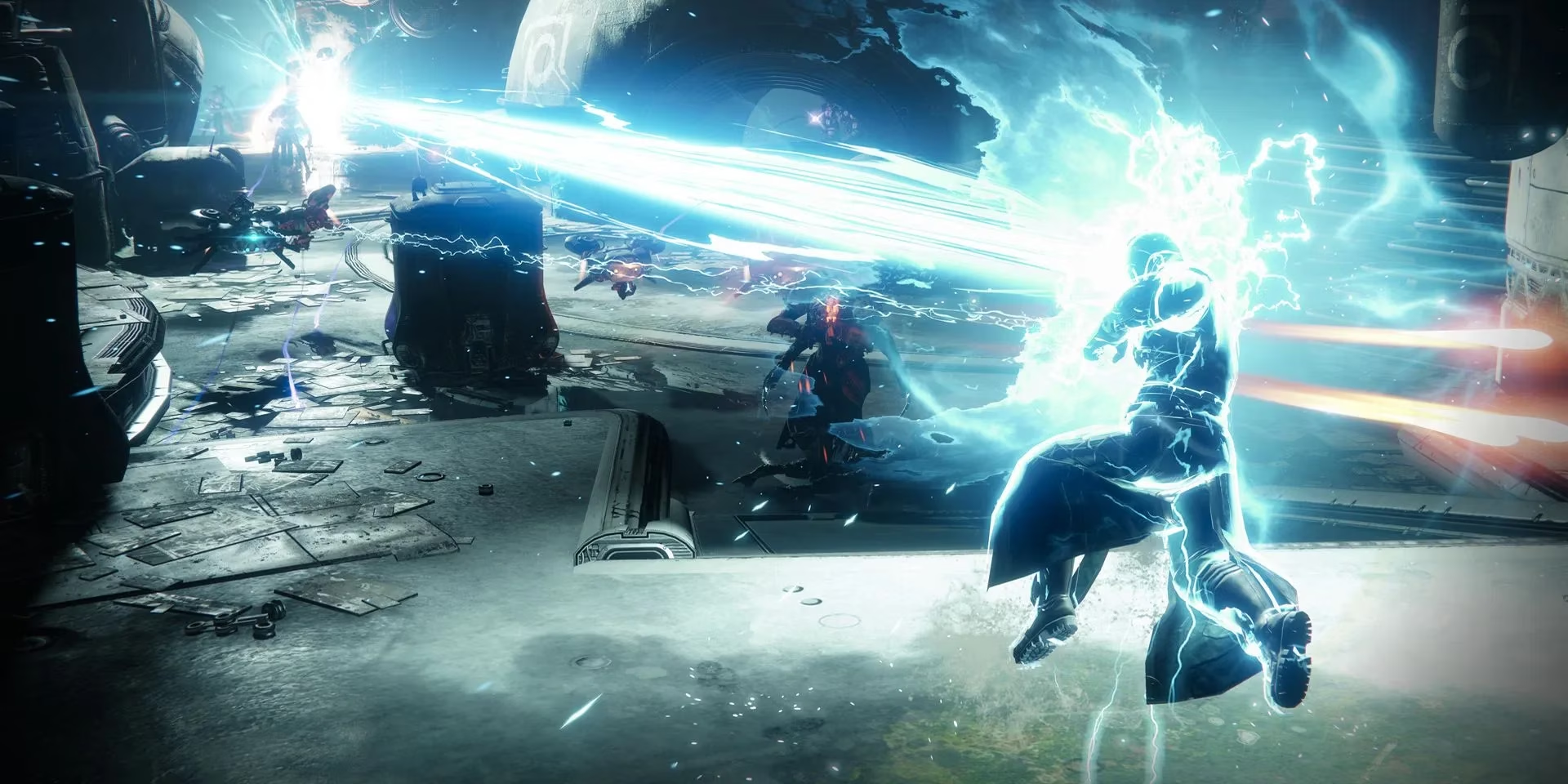
When Destiny 2 Season 18 arrived in 2022, it carried Arc 3.0 on its back like a storm front rolling over a quiet prairie. Bungie had promised a sweeping rework of the final Light subclass, and the first look—playfully inspired by Crank 2: High Voltage—suggested wild energy, amplified movement, and explosive potential. Yet within less than twenty-four hours, a familiar rift opened in the community. Warlock mains, who had waited for their Arc identity to be reborn, found themselves staring at a toolkit that felt less like a thunderclap and more like a polite knock on a door already blown open by Hunters and Titans. The Season 18 launch became a case study in how reworks can be technically ambitious yet emotionally uneven.
The Uneven Gifts of Arc 3.0
The broad strokes were easy to summarize. Hunters received a new Super called Gathering Storm, a decision that made sense because they were the only class without a second Arc Super. Titans gained a new dodge ability and an overcharged Arc melee named Thunderclap. Warlocks, by contrast, received one new melee ability—a Lightning-Hadoken-style attack that looked spectacular in trailers but did not fundamentally alter the class fantasy. For a community that had watched Void 3.0 and Solar 3.0 reshape other subclasses with dramatic new verbs and interactions, Arc 3.0 felt lopsided.
The numbers made the wound sting harder. A Reddit user broke down the damage output of DPS-heavy Supers and found that Chaos Reach, especially when paired with the Geomag Stabilizers exotic, did less damage than its competitors. The new DPS king of Arc 3.0 was Gathering Storm, the Hunter Super, which consistently outdamaged Thundercrash and quickly became the default choice for most Hunter mains. Several discussions on the Destiny subreddit echoed the same complaint: Warlocks had been given a fresh coat of paint, while Hunters and Titans had been handed new engines.
| Class | Arc 3.0 Headline Addition | Community Mood |
|---|---|---|
| Warlock | New Lightning-Hadoken-style melee; Chaos Reach unchanged in core role | Frustrated, outgunned |
| Hunter | Gathering Storm Super | Triumphant, new DPS king |
| Titan | Thunderclap melee and dodge | Energized, aggressive |
A Lighthouse Keeper in a Hurricane
To understand why Warlock mains were so upset, it helps to picture them as lighthouse keepers polishing a lens while a hurricane raged offshore. They had precision tools, elegant abilities, and a long history of being the game's resident scholars. But Arc 3.0 asked them to compete in a sandbox where blunt force was king. A veteran Warlock main could chain abilities, glide across the battlefield, and unleash Chaos Reach with Geomag Stabilizers, yet the boss health bar often seemed to mock the effort. Meanwhile, a Hunter could call down Gathering Storm and watch the damage numbers climb like ivy on a wall.
The disappointment spread like frost across a windowpane. It was not that Warlocks had received nothing; it was that what they received felt like a side dish when everyone else got a main course. The Lightning-Hadoken melee was fun, but it did not solve the underlying issue. Warlocks wanted to feel like storm-callers, not beam-holders. They wanted their Arc identity to be as transformative as the Hunter's new Super or the Titan's Thunderclap. Instead, they were left with a subclass that felt like a cartographer asked to redraw a coastline after the sea had already moved.
Beyond the Subclass Debate: Lightfall and Bungie's Wider Moves
Alongside the Season 18 reveal, Bungie also pulled back the curtain on the upcoming Lightfall expansion. It promised to bring back an old enemy in the form of Calus and to introduce a new subclass called Strand. Another announcement revealed that Destiny 2 was now available on the Epic Games store, and the Fortnite x Destiny collaboration was showcased to a mixture of curiosity and excitement. Furthermore, Destiny 2 would receive its own in-game LFG system, one that would even allow players to rank one another.
One piece of news that fans absolutely loved was that Bungie did not plan to sunset any more expansions. Veterans and new players could have the full Destiny 2 experience at all times, a promise that felt like a locked door finally being opened. In a live-service game where content often vanishes into the vault, that commitment was a rare and welcome reassurance.
The 2026 Lens
By 2026, the Season 18 controversy is no longer breaking news. Lightfall has come and gone, Strand has become a staple of buildcrafting, and The Final Shape and subsequent episodic content have pushed the story into new territory. The in-game LFG system and fireteam finder tools are now standard parts of the experience. Sunsetting remains retired, and the Epic Games store launch is a historical footnote. Yet the Arc 3.0 debate still echoes in class identity discussions, because it exposed a truth that balance patches cannot easily erase: players do not just want to be viable; they want to feel powerful in a way that matches their class fantasy.
Hunters remember Gathering Storm as the moment they became Arc's executioners. Titans remember Thunderclap as the moment they became walking thunder gods. Warlocks remember Arc 3.0 as the moment they were asked to keep the lights on while others summoned the lightning. That perception may have softened with later buffs, new exotics, and the broader sandbox shifts of the following years, but the initial sting shaped months of conversation.
The lesson from Season 18 is not that Bungie cannot design a good rework. It is that a rework can be mechanically sound yet narratively and emotionally incomplete. Like a symphony where one section plays in a different key, the whole performance suffers, no matter how talented the musicians are. In 2026, Destiny 2 has moved far beyond that stormy launch, but the Warlock mains who felt left in the rain have not entirely forgotten the weather. 🎇