Destiny 2's 2025 Overhaul: From Linear Stories to Open-Ended Adventures and Free Content
Destiny 2's 2025 roadmap and new content cadence deliver bold expansions, innovative loot systems, and a thrilling non-linear narrative revolution.
Well, Guardians, it's 2026 and I'm still here, grinding away in the Last City. Looking back at Bungie's grand plans for 2025, which we were all buzzing about last year, feels like reminiscing about a prophecy that was both thrilling and terrifying. The roadmap they laid out was more ambitious than a Titan trying to shoulder-charge a raid boss solo. They promised to move away from one giant annual expansion to two medium-sized ones, codenamed Apollo and Behemoth. For a game that sometimes felt as predictable as a Dreg's patrol route, this was a seismic shift. The first episode, Echoes, had landed with all the impact of a wet firecracker, feeling about as different from the old seasonal model as a Shank is from a Servitor. But Bungie swore up and down that Revenant and Heresy would fix the issues. Let's just say, as someone who lived through it, the journey to get here has been... an experience.
The New Content Cadence: A Tale of Two Expansions
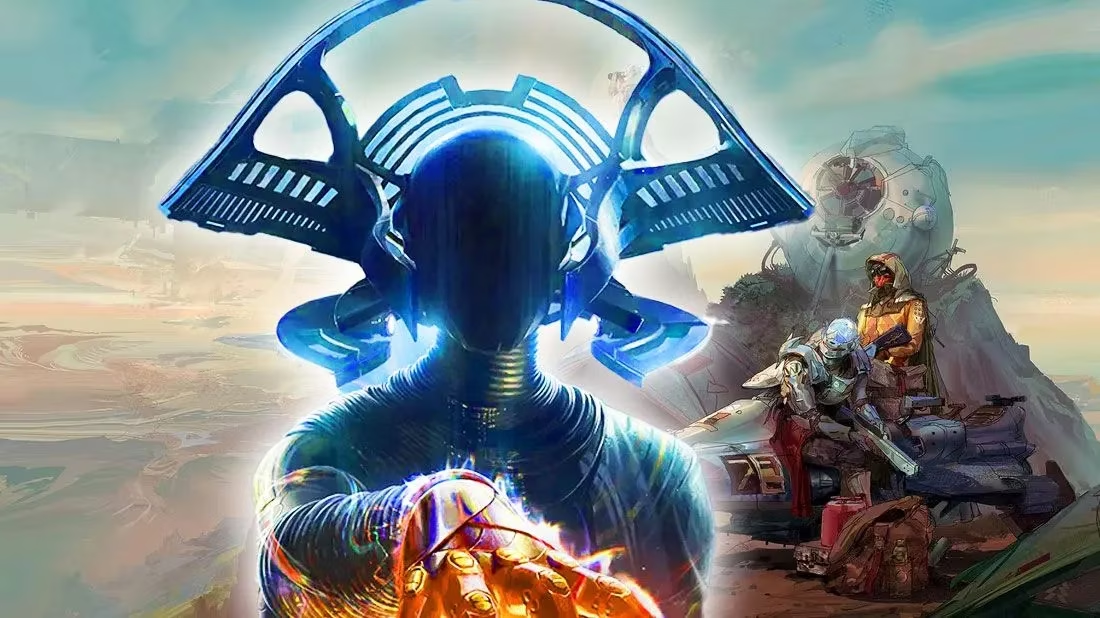
So, the big structural change was ditching the monolithic yearly expansion for a duo of more frequent, meaty updates. Apollo kicked off in Summer 2025, and Behemoth followed in Winter 2025. Comparing them to the old model was tricky; they weren't quite The Witch Queen behemoths, but they had more heft than a typical season, landing somewhere between the classic DLCs like The Dark Below and the beloved Rise of Iron. This was a gamble that felt as precarious as balancing on the edge of the Tower. The silver lining? Four free major content updates released quarterly alongside these expansions. Yes, FREE. Well, mostly. The core content was free, a move more refreshing than finding a god-roll weapon on your first run. Each update came with a Rewards Pass (likely requiring Silver, because Glimmer doesn't pay the bills at Bungie). This model was designed to keep the world feeling alive and less like we were all waiting for the next big, paid-for thing to drop.
The loot system got a complete overhaul too. Bungie introduced a tiered reward system (Tiers 1-5) where difficulty directly correlated with loot quality. It was a system that promised to make every activity worth replaying, with unique reward pools for different modes. The goal? To make our Guardian's stats feel as impactful as they did in the early days, rather than being overshadowed by whatever meta gear we'd grinded for. It was an attempt to make the grind feel less like chewing on stale baguette and more like savoring a perfectly cooked steak.
A Story in Your Hands: The Non-Linear Narrative Revolution
The most audacious change, starting with Apollo, was the storytelling. Bungie decided to chuck the linear narrative train out the airlock. The new saga would have a set starting point, but from there, the path was ours to choose. It was like being given a map of the European Dead Zone with only one marked location and being told, "The story's out there, good luck!" This open-world RPG approach was a double-edged sword sharper than any Falling Guillotine.
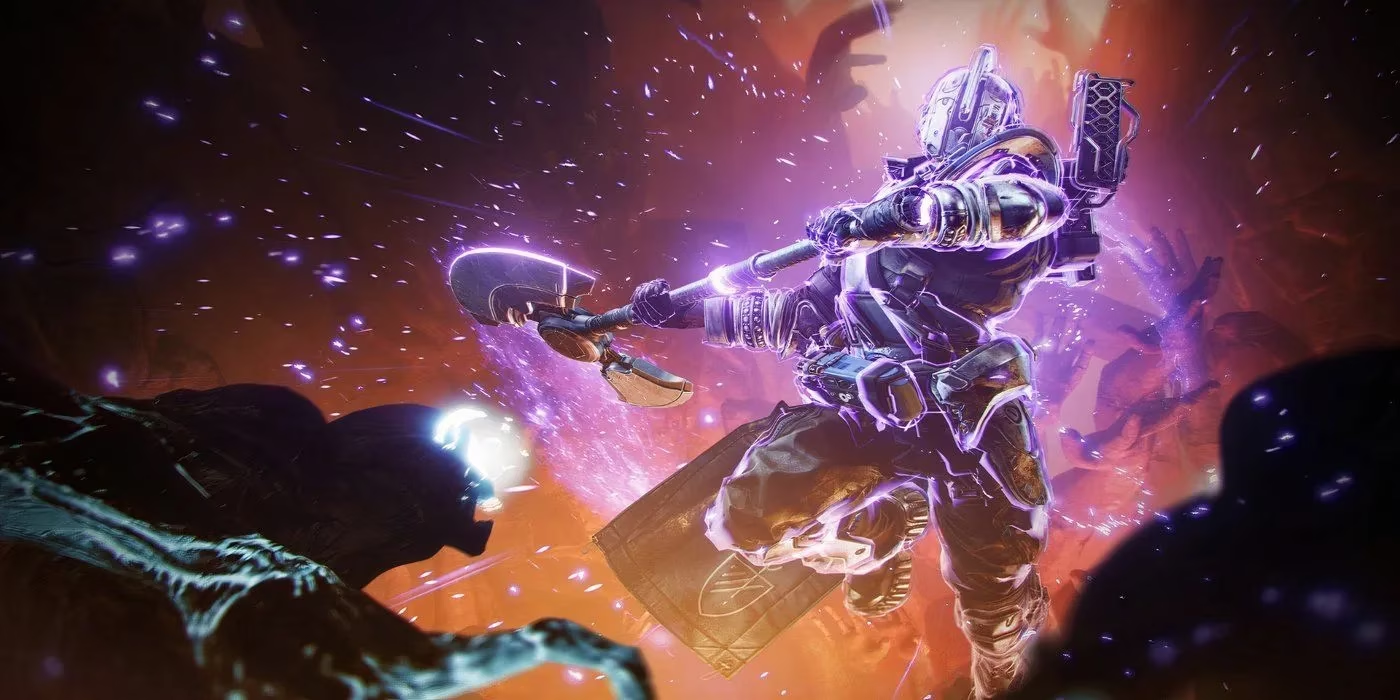
Apollo was the launchpad for the next major saga of the Destiny universe. Episodes Revenant and Heresy in 2025 were meant to be the breadcrumbs leading us there. This move away from a rigid, week-by-week narrative was Bungie's answer to player agency. Would the plot points converge in a satisfying way, or would it feel as disjointed as a fireteam with three different objectives? That was the million-Glimmer question. It represented a fundamental shift from being a passenger on Bungie's story bus to being handed the keys and a vague set of directions.
The State of the Game: Evolution, Not Revolution
A big topic in the community back then was the desire for a Destiny 3—a clean slate to fix the aging engine and technical debt. Bungie's commitment to expanding Destiny 2 with this new model was their resounding answer: No sequel in sight. They were betting the future on evolving the current game, which felt as risky as trying to solo a Grandmaster Nightfall with a blue-quality sidearm. After the highs of The Final Shape, the pressure was immense. These changes, from the content cadence to the loot and story, were Bungie's play to keep the ship afloat and sailing forward.
Now, in 2026, we have the benefit of hindsight. Did it work? Well, let's just say the transition was... bumpy. The promise was grand:
-
Two substantial expansions per year instead of one.
-
Free quarterly content updates for all players.
-
A tiered loot system that rewarded skill and dedication.
-
A player-driven, non-linear story starting a new saga.
The reality was a mix of triumph and turbulence. The new narrative freedom was exhilarating when it worked, making the world feel more alive and mysterious, like discovering a hidden room in the Tower you never knew existed. But when it didn't, it could feel as confusing and directionless as a New Light player in the Helm. The free updates were a community lifeline, though the paid Rewards Passes remained a point of contention—a necessary evil, like listening to the Drone's endless sermons.
Reflecting from 2026, Bungie's 2025 roadmap was a bold attempt to reinvent the wheel while the Sparrow was still moving at full speed. It was a year that felt less like a standard content drop and more like the developers had opened the game's hood and started rewiring the engine mid-drive. Some changes stuck and became beloved features, while others were tweaked and refined based on our feedback. It set the stage for where we are today, proving that even a universe as vast as Destiny's needs the occasional cosmic recalibration. The journey continues, Guardian, and let me tell you, the view from here is wild.