Destiny 2 Seasonal Burnout: Did Bungie Actually Fix the 'Job Simulator' Problem?
Destiny 2 and Season of the Seraph faced backlash for repetitive content; Bungie responded with major changes and improved seasonal variety.
As someone who has sunk far too many hours into Destiny 2, I still remember late 2022 as one of the most uncomfortable moments for the community. Season of the Seraph was supposed to deliver a fresh narrative and new loot, but instead, it became the flashpoint for a much bigger conversation about how seasonal content was starting to feel like clocking into work. The community was loud, frustrated, and honestly, a little tired. I was right there with them.
The breaking point came when popular Destiny YouTuber Gladd posted a video calling out how monotonous the game had become. He basically said what a lot of us were already feeling: weekly resets, repetitive seasonal loops, and a progression system that felt less like adventure and more like obligation. That video opened the floodgates, and suddenly the conversation shifted from “this season is a little dry” to “Destiny 2 needs to change its entire seasonal backbone.”
Bungie had to respond, and game director Joe Blackburn stepped up on Twitter. He acknowledged the dissatisfaction head-on, saying the team had heard the feedback “loud and clear” regarding the seasonal structure. What stood out to me was that he didn't just offer empty PR talk. He admitted that the current system wasn't sustainable long-term and promised drastic changes with the Lightfall DLC in 2023. He also said something that felt genuinely important: the team was excited to take more risks with seasonal content. That was a big deal because, for a while, Destiny 2 had felt safe to a fault.
Still, Blackburn was careful to manage expectations. He noted that players would still see novelty, thematic variety, and new ways to progress their characters over the next several months. In other words, don't expect everything to change overnight. That made sense. These kinds of structural overhauls take time.
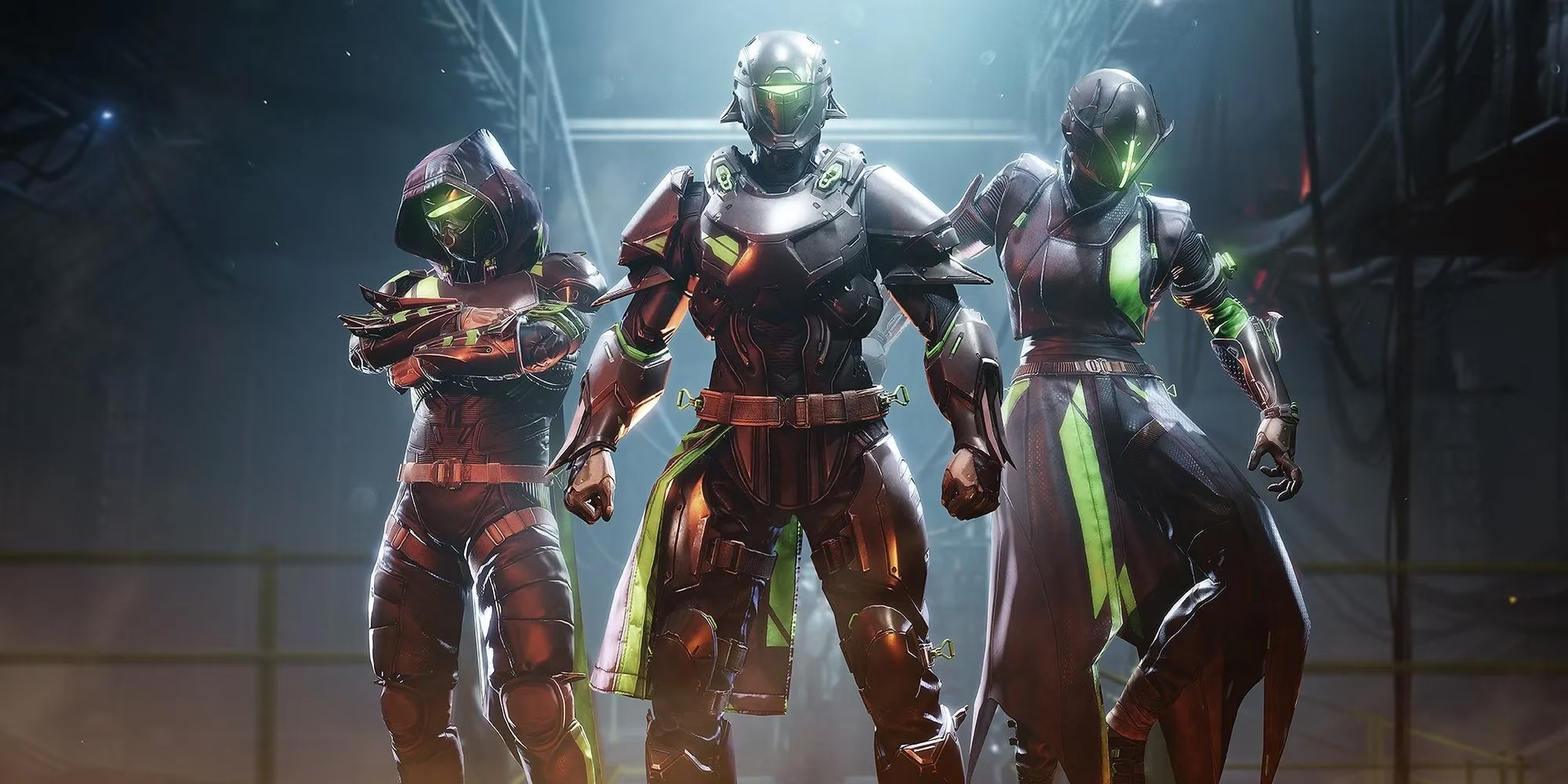
Looking back from 2026, I think the biggest question is: did Bungie actually follow through? The short answer is yes, but it wasn't instant. Lightfall arrived in February 2023 with a lot of narrative ambition and some noticeable shifts in how seasons were built. Were there still grindy moments? Of course. This is still a looter shooter. But the old feeling of running the exact same weekly checklist season after season started to loosen. We saw more experimental activity formats, better thematic variety, and less reliance on raw power-level climbs as the only reason to log in.
What I appreciate most is that the feedback didn't fall on deaf ears. The 2022 backlash wasn't just about a single bad season. It was about players feeling like their time wasn't respected. By 2026, Bungie has made real strides in that area. There are more catch-up mechanics, more narrative-driven beats, and a clearer attempt to make each season feel like its own story rather than a reskin of the previous one.
Let me break down how the complaints from that era compare to the reality I see now:
| 2022 Player Complaint | 2026 Reality |
|---|---|
| Seasonal backbone felt repetitive | More varied activity structures and seasonal narratives |
| Power grind felt like a part-time job | Power climb reduced, with smarter catch-up options |
| Feedback seemed ignored | Better communication and visible iteration from Bungie |
| Content felt monotonous | Risky seasonal experiments are more common |
But here's a question worth asking: is Destiny 2 perfect now? No, and I don't think it ever will be. Any live-service game will always have grind. The difference is whether that grind feels intentional and rewarding, or just like a chore designed to keep player numbers up. In 2026, it leans much more toward the former.
That Season of the Seraph controversy was a wake-up call. It forced Bungie to rethink a system that had quietly become stale, even when individual content drops were still visually impressive. The armor was cool, the lore was interesting, but the loop underneath was tired. When Gladd's video went viral, it didn't create the problem. It exposed what many of us had been feeling for months.
What I hope doesn't happen is that Bungie gets comfortable again. The best thing about that 2022 moment is that it pushed the studio to take risks. Some of those risks paid off. Some didn't. But the willingness to try new things is exactly what keeps me logging in. The promise Blackburn made back then wasn't just about fixing a seasonal structure. It was about proving that player feedback matters. From where I'm standing in 2026, that promise has been kept more than broken.
The following breakdown is based on industry reporting from Forbes - Games, where live-service titles like Destiny 2 are often evaluated through the lens of retention, content cadence, and player-time economics—context that helps explain why the 2022 “seasonal burnout” backlash mattered beyond one rough season and why Bungie’s later emphasis on experimentation and reduced mandatory grind aligns with broader trends in how major studios respond when engagement systems start to feel like obligations.