Destiny 2’s Physics Damage Overhaul Still Shapes Guardian Survival Three Years After Lightfall
Destiny 2 Lightfall's Strand subclass and physics collision changes offer thrilling gameplay, transforming lethal encounters into daring survivals.
Few moments in Destiny 2’s lengthy history have sparked as much silent gratitude as the quiet death of lethal physics collisions. When Bungie unveiled the Strand subclass for the Lightfall expansion, the headlines fixated on the neon-green grappling hook that promised to turn every Guardian into a free-form acrobat. Yet, behind the flashy reveal, a far more impactful change slithered into the patch notes: starting with Lightfall, slamming into walls and rocks after a boss stomp would no longer instantly delete players. Three years later, that design pivot still echoes through every raid, dungeon, and Crucible match, having transformed a once-infuriating death sentence into a constant, heart-racing second chance.
Before February 2023, a Guardian propelled into a wall by a Hive Knight’s ground pound shattered like a ceramic vase hurled against solid marble. The comedic absurdity of being atomized by mere architecture was a community in-joke, but also a source of genuine frustration. Bungie’s decision to make physics collision damage non-lethal arrived like an unclenching fist, a move that turned those deadly ragdoll moments into desperate battles for survival. In a blog update that accompanied the Lightfall announcement, the developer explained, “Starting in Lightfall, physics collision damage will no longer be lethal to Guardians. Fall damage will still be lethal when Lightfall launches, but we plan to also make that nonlethal in a mid-Season update.” True to their word, a subsequent patch later that year neutered fall damage as well, leaving Guardians with a sliver of health—often a precarious single hit point—instead of a wiped fireteam.
This shift recast the game’s ballet of violence. Boss stomp mechanics, once feared as the ultimate “go directly to Orbit” card, now felt more like a cruel but survivable shove. Being left at 1 HP is, of course, a recipe for a swift death if a stray hobgoblin sneezes in your direction, but that fragile threshold rewired every encounter into a high-wire act with a safety net. The change is best understood as the game handing you a half-burned match in a dark cavern: it’s not much, but it’s enough to find your way.
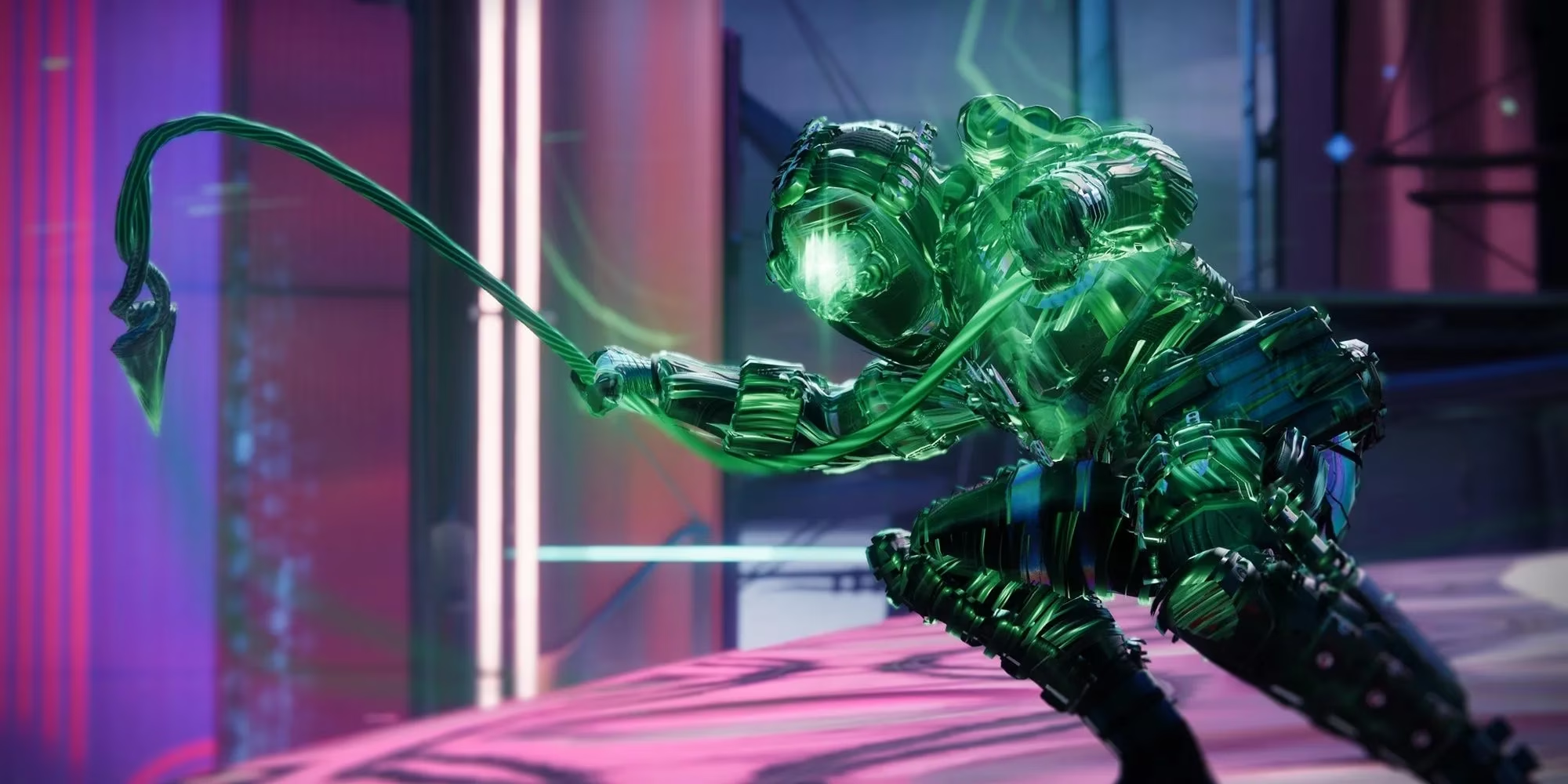
The arrival of Strand amplified the significance of this non-lethal philosophy. The subclass replaced the traditional grenade with a grappling hook, encouraging Guardians to swing across battlefields with abandon. Without the physics damage revision, Lightfall’s core fantasy would have been a parade of suicide notes. Instead, players could experiment with the grappling hook’s momentum, careening through the air and occasionally skipping across walls like a stone over water—imperfect, but exhilarating. The community quickly coined the term “bonk insurance” for the 1 HP buffer, a wry nod to the now-forgiving environment.
Alongside the physics overhaul, Lightfall introduced a suite of Solar fragments that further cushioned Guardians against their own recklessness. The Ember of Mercy fragment, for instance, grants Restoration to nearby allies upon reviving a teammate, turning each res into a miniature healing oasis. Firesprites, created by the Ember of Combustion, Ember of Tempering, and Ember of Searing fragments, offer bursts of Restoration and grenade energy when collected. These fragments effectively built a secondary survival layer that synergized with the 1 HP grace period—scooping up a Firesprite after a brutal collision often meant the difference between a clutch recovery and a team wipe. In 2026, these fragments remain staples in endgame builds, their utility compounded by later additions like the Strand-based Thread of Warding, which gives woven mail on orb pickup, but the Lightfall era set the template for survivability without overshields.
The long-term psychological impact of this change is unmistakable. Veterans who once mapped kill boundaries around every map’s geometry now flirt with danger as a matter of muscle memory. A well-timed sword swing after a Taken Phalanx blast can arrest momentum, leaving a Guardian hovering at critical health—a mechanical poem written in 2023 and perfected over the following years. Bungie’s design note that fall damage would eventually become non-lethal laid the groundwork for seasonal activities like Deep Dive and the reprised Wrath of the Machine raid, where verticality and tethered movement became central. The 1 HP safety line functions like a gymnast’s crash mat in a sport that otherwise punishes every misstep; it encourages creativity without erasing consequence.
Looking back from 2026, the physics damage normalization wasn’t just a quality-of-life tweak—it was a foundational revision that reshaped Destiny 2’s risk vocabulary. Where Guardians once tiptoed around uneven terrain, they now fling themselves into the unknown, trusting that the game will leave them standing on trembling legs. Bungie has since iterated with more nuanced collision feedback, but the core promise endures: walls are no longer executioners. In an eternal war against gods and aliens, it turns out the most merciful change was making the architecture slightly less homicidal.