Fortnite Meets Destiny 2: Crucible, Javelin-4, and Creator-Made Chaos
Fortnite and Destiny 2's Crucible crossover transformed Javelin-4 into thrilling Zone Control combat, proving crossovers can be more than cosmetics.
Back in August 2022, Fortnite and Destiny 2 collided in a crossover that gave players something rarer than a simple skin drop: a full game mode inspired by Destiny 2's Crucible. Epic Games and Bungie teamed up to bring the Javelin-4 map and Zone Control-style combat into Fortnite, and even in 2026, the experiment remains a fascinating snapshot of how crossovers can go beyond cosmetics. Instead of just selling outfits, the two studios let players step into class-inspired loadouts and fight on a map that Destiny fans knew by heart. It was part marketing, part love letter, and part proof that Fortnite's creative ecosystem could handle another universe's competitive identity.
A Crossover Revealed at the Right Time
The collaboration arrived during a busy period for both games. Bungie held a Destiny 2 showcase in August 2022 during the opening night of Gamescom 2022. That event packed in major announcements: the next expansion, Lightfall; the new Strand element; several quality-of-life changes; the upcoming Season of the Plunder; a new raid; and the Fortnite crossover. For Destiny 2 fans, it was a lot to process. For Fortnite fans, it was another sign that Epic Games was willing to pull in almost any major franchise. Was there any universe Fortnite would not eventually visit? At the time, the answer seemed to be a firm no.
Fortnite was also busy with other collaborations. The Dragon Ball crossover had launched the other week, adding skins for Goku, Vegeta, Bulma, and Beerus. That two-week event gave players Creative Islands where they could group up with friends to watch episodes of the anime or explore iconic locations, plus the Tournament of Power Competitive playlist. In that context, the Destiny 2 crossover did not feel like an isolated stunt. It felt like part of a larger strategy: keep Fortnite's island fluid, keep players guessing, and keep every crossover feeling like an event.
How the Javelin-4 Mode Worked
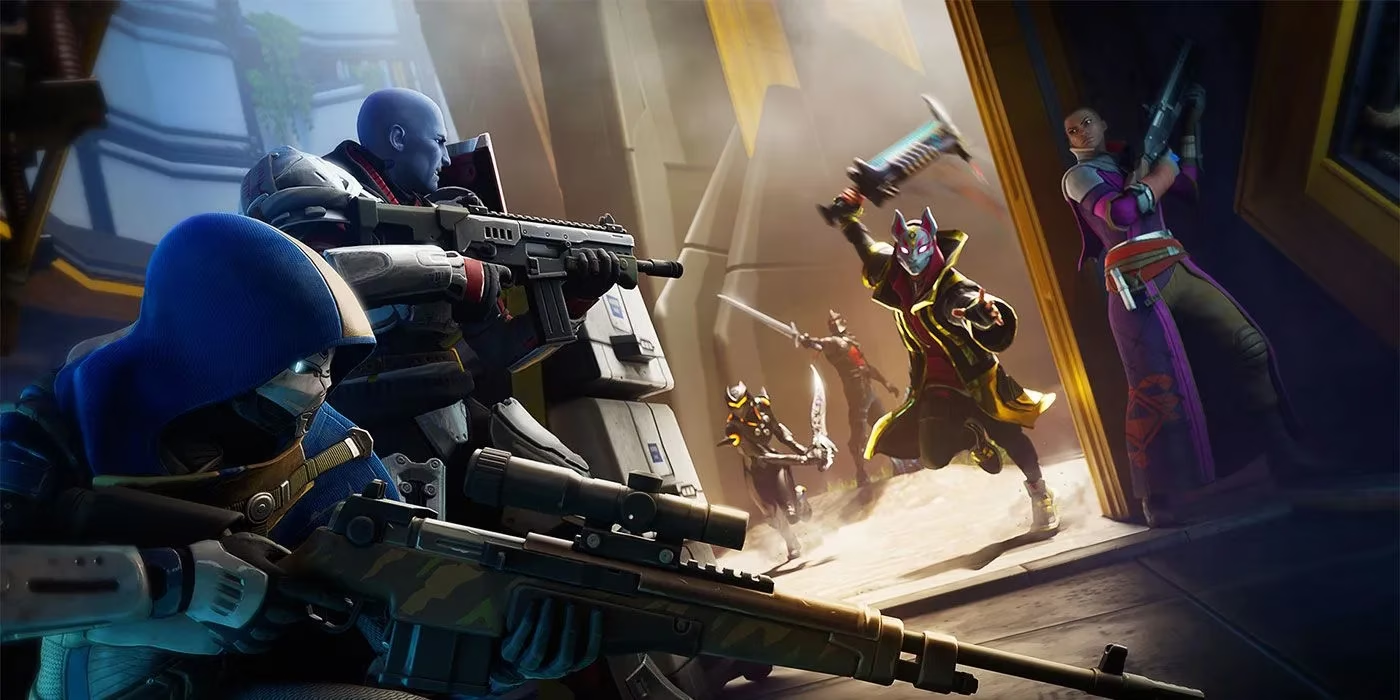
Epic Games announced on Twitter that the Destiny 2 and Fortnite collaboration included a new game mode inspired by Destiny 2's Zone Control Crucible mode. The mode featured the iconic Javelin-4 map, a setting that Destiny 2 veterans recognized immediately. But here is the twist that made the story even more interesting: PC Gamer reported that Epic Games did not actually make the mode itself. Instead, Epic commissioned the work to YouTube creator team PWR. That decision mattered. It showed that Epic was willing to trust outside creators with a crossover built around another studio's competitive mode.
In the creator map, players chose between three loadouts inspired by Destiny 2's classes. The Titan-inspired loadout came with assault rifles and shotguns. The Warlock loadout focused on sniper rifles. The Hunter loadout gave players revolvers and sticky bombs. Each loadout also included ultimate abilities inspired by their Destiny 2 counterparts. The result was not a perfect one-to-one recreation of Destiny 2's sandbox, but it did not need to be. It translated the fantasy of each class into Fortnite's faster, more flexible combat language.
| Destiny 2 Class | Fortnite Loadout Weapons | Ultimate Inspiration |
|---|---|---|
| Titan | Assault rifles and shotguns | Titan-style ultimate |
| Warlock | Sniper rifles | Warlock-style ultimate |
| Hunter | Revolvers and sticky bombs | Hunter-style ultimate |
That table may look simple, but it captures why the mode worked. Players who mained a Titan in Destiny 2 could lean into aggressive pushes. Warlocks could hang back and pick shots. Hunters could play tricky and explosive. In Fortnite, where every match can turn into a build fight or a chaotic third-party, those roles gave the crossover a surprising amount of structure.
Skins, Armor Sets, and Eververse
The collaboration was not only about gameplay. Fortnite added skins for Zavala, Ikora, and the Exo Stranger. Each skin cost 1,500 V-bucks. There were also previously leaked Fortnite-inspired skins for Destiny 2. On the Destiny 2 side, the Fortnite-inspired armor sets were available through the game's Eververse store. Three sets based on Fortnite characters were available for purchase, one for each class. The new Titan armor was based on the Black Knight. The Warlock armor was based on Drift. The Hunter armor was inspired by Oblivion. It was a true two-way street: Destiny 2 characters entered Fortnite, and Fortnite aesthetics entered Destiny 2.
That symmetry is what makes the crossover stand out in retrospect. Plenty of games do promotional skins. Fewer games let each audience feel like they are getting something exclusive from the other world. A Destiny 2 player could log in and look like a Fortnite icon. A Fortnite player could drop into a Crucible-inspired map and wield a Warlock's sniper rifle. Both sides had a reason to pay attention, and neither side was treated as an afterthought.
Why Creator-Made Crossovers Still Matter in 2026
It is pretty interesting that Epic Games decided to commission its Crucible-based map, and PWR looks to have done an impressive job recreating Destiny 2's Javelin-4 in Fortnite. Would it be great if Epic Games continued to work with more creators for crossover content? Absolutely. Given how well this one was made, the model deserved more experiments. By 2026, creator-made maps and branded experiences are a bigger part of Fortnite's ecosystem, but this collaboration helped show what was possible when a publisher trusted a skilled community team with a beloved franchise.
The Fortnite and Destiny 2 crossover was not just a headline. It was a playable conversation between two very different shooters. One is a battle royale built on constant reinvention. The other is a looter shooter built on deep class identities and ritual playlists. The Javelin-4 mode did not erase those differences. It celebrated them. That is why the crossover remains worth revisiting, even years later. In a live-service landscape where crossovers can feel disposable, this one left a map, a mode, and a memory. And honestly? That is more than most collaborations ever manage.