How Destiny 2's Farewell to Power Levels Redefined Live-Service Games
Live-service games and loot systems, once hollow and repetitive, evolved after Destiny 2 abandoned power-level grinds in 2024.
Elena scrolled through the 2026 spring sale highlights, her cursor hovering over yet another superhero title promising endless loot, daily challenges, and a dizzying cascade of damage numbers. The screenshots showed brightly colored gear, percentage bonuses, and four-player co-op—all the hallmarks of a live-service game that, like a house built on quicksand, would inevitably sink under its own hollow weight. She had seen the trailer for Suicide Squad: Kill the Justice League back in 2023, and the memory still made her wince. That game had arrived with all the subtlety of a marketing spreadsheet come to life: gear scores, weapon attachments, an always-online requirement, and a loot system that treated players like moths circling a flickering bulb. But the light was never warm, only bright. It was, as many critics later called it, game design in reverse—start with the revenue model, then staple a world onto it.
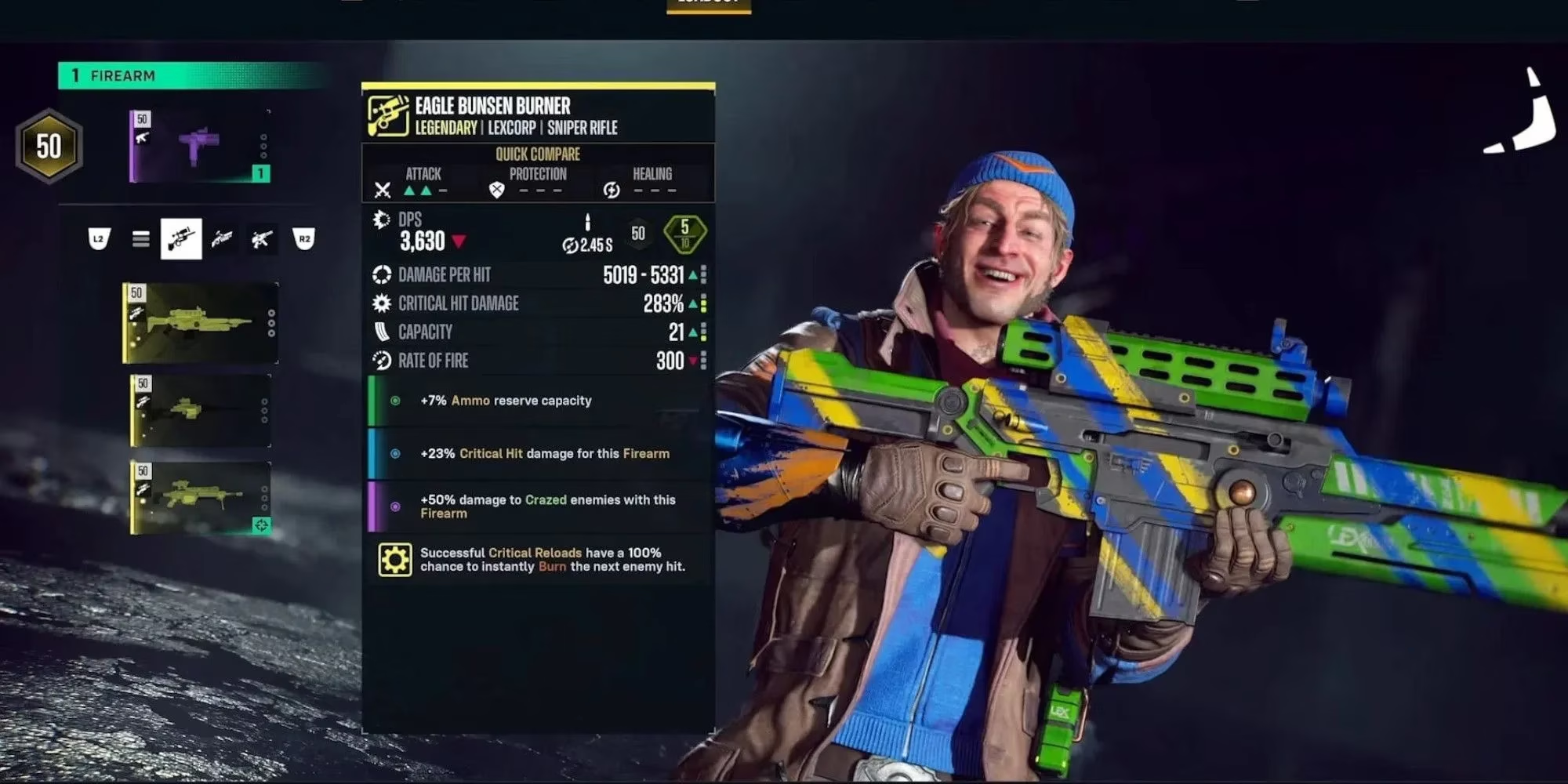
In those days, the industry was trapped in a Pavlovian trance. Studios saw Bungie's Destiny 2 printing loyalty and microtransaction dollars year after year, and they wanted a slice of that forever-game pie. So they cloned the framework: rarity colors, power levels, daily and weekly resets. But they missed the soul. They built elaborate Skinner boxes—pellets disguised as purple engrams—without understanding that a rat will eventually stop pressing the lever if every pellet tastes like cardboard. Elena remembered grinding through Marvel's Avengers only to realize her upgraded Hulk gloves merely turned a number from 145 to 147 and nudged her critical hit chance by an imperceptible 3%. It was a system that treated a hero's arsenal like a collection of nearly identical coffee mugs: same shape, same function, just stamped with a slightly bolder logo.
Then something shifted. By 2024, Bungie had quietly begun to dismantle the very power-level treadmill that its imitators were still frantically trying to replicate. The Lightfall expansion of early 2023 had introduced the Guardian Rank system, which measured a player's growth through accomplishments, not arbitrary experience points. But the true revolution came a season later, in the summer of 2023, when the power level grind was abolished entirely. Elena still recalled the forum posts: veterans asking, What will we even do without the number chase? The answer emerged slowly, like a city skyline appearing as morning fog burns away. Without the noise of climbing digits, Destiny 2 revealed its true architectural beauty.
Elena's own turning point came with a weapon that would have been unthinkable in those old, number-obsessed shooters: the Osteo Striga, an exotic submachine gun that fired organic, tracking projectiles which poisoned enemies and spread the toxin in chain reactions. It wasn't just a gun with higher DPS; it was a brush that painted combat encounters with a completely new rhythm. Building around that weapon meant choosing armor mods that fueled grenade energy on poison kills, a subclass fragment that devoured those toxic clouds for health, and a playstyle that turned every battlefield into a swirling, viral dance. Compare that to the average legendary rifle from a game like Outriders or Suicide Squad, which might offer "5% increased reload speed after a precision kill." The former felt like receiving a master-crafted cello; the latter, like being handed a slightly shinier spoon.
This distinction—between tools and trinkets—was the chasm that separated Destiny 2 from its would-be successors. In a well-designed loot ecosystem, gear is not just a stat delivery system but a permission slip for new forms of play. A grenade launcher that covers the ground with blight, a rocket launcher that empowers allies' rockets with swarm missiles, a sniper rifle that condenses all its rounds into one massive shot—these exotics didn't just make numbers bigger; they reshaped the very grammar of combat. And the diverse activities that dropped this gear—dungeons, raids, Grandmaster Nightfalls, seasonal arenas—each required completely different tactical vocabularies. A player's journey was no longer a linear staircase, but a branching map of interconnected mastery.
By 2026, the live-service landscape had begun to absorb this lesson, although slowly. The most successful titles were now those that treated progression as a story the player wrote, not a meter the player filled. Elena noticed that even single-player action games had adopted a philosophy of meaningful sidepaths. The hollow, executive-mandated loot games had become cautionary tales retold in developer GDC talks: Don't chase the ghost of early Destiny; chase the game that Bungie itself evolved into. The irony was thick enough to cut. The very model that had inspired a generation of number-chasing, skinner-box copycats had, by casting off its own numerical anchors, shown that live-service could mature into something respectful of a player’s time and intelligence.
Elena closed the store page. The game she had been eyeing promised "endless buildcrafting depth" right beneath a screenshot of a character sheet drowning in percentage boosts. She searched for one thing: Did the gear mean anything? Could a single weapon perk rewrite her entire approach to an encounter? If the answer was only "more damage," then it was just another arrangement of deck chairs on a ship that would inevitably sink. Live-service wasn't a four-letter word. But to her, and to a growing legion of players, the four-letter word was numb—the sensation that came from watching numbers grow while the soul of the game withered. In 2026, thanks to the path Destiny had cleared, gamers finally had the vocabulary to demand a sequel to meaning, not a sequel to metrics.
Next: How Rocksteady's post-Suicide Squad pivot turned a failure into a powerful lesson on respecting player agency.