How Team PWR Rebuilt Destiny 2’s Javelin-4 Inside Fortnite—And Why It Still Matters in 2026
Fortnite x Destiny 2's Javelin-4 crossover hit Fortnite Creative, rebuilt by Team PWR using Fortnite assets to evoke the Crucible map.
As a longtime Destiny 2 player and Fortnite Creative tinkerer, I still find myself thinking about the crossover that gave Guardians a Crucible map inside Fortnite: Javelin-4. When the Fortnite x Destiny 2 collaboration arrived alongside Destiny 2’s debut on the Epic Games Store, it was more than a marketing stunt. It was a test of how far Fortnite Creative could stretch when two very different sci-fi universes had to share the same toolbox. And in 2026, as Fortnite Creative projects and crossover events have become common, that test still feels like a landmark. 🎮
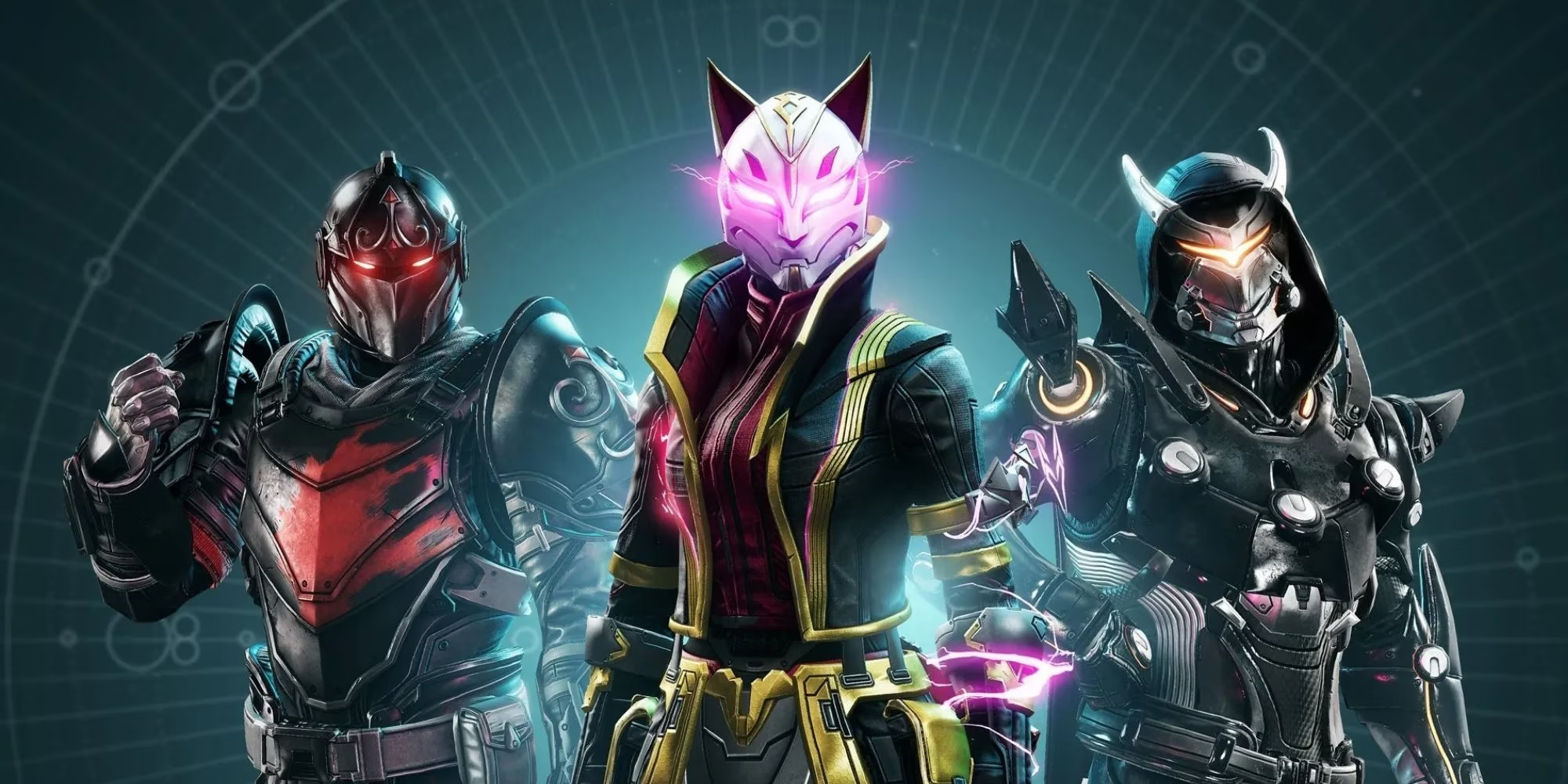
What made Javelin-4 so fascinating? It was not a direct port. Bungie only provided creative guidance to Team PWR, the builders behind the map. Team PWR had to construct the map from scratch using only the assets available in Fortnite Creative. No custom imports. No Destiny-specific models. Just Fortnite’s existing pieces, rearranged with enough care to make a Destiny player feel at home.
In an interview with IGN, Boomer Gurney, creative director for PWR, explained how difficult that process was. “One thing that we really, really are proud of is, like you said, kind of as close as we were able to get with the recreation of the map. This was challenging because it’s not like we were able to import custom assets, right? We had to use the available tools and available items in Fortnite and, kind of, creatively put together these things.” That quote captures the whole project. It was not about copying every polygon. It was about translating the memory of a map through a different engine’s vocabulary.
My favorite example? Team PWR used parts from Fortnite Mechs to recreate the huge rocket in the center of Javelin-4. That is the kind of MacGyver-style problem solving that makes Creative mode exciting. You cannot drop in a Destiny rocket model, so you raid Fortnite’s toy box and build one from mech limbs and whatever else fits. Does it look exactly like the original? No. Does it instantly communicate “Javelin-4” to a Guardian? Absolutely.
Even Destiny 2’s lead concept artist, Dima Goryainov, praised the effort. He said Team PWR did “an amazing job in finding creative ways to use existing assets in order to closely recreate this iconic map.” That endorsement matters. When the original game’s art team tips its hat, you know the recreation is more than a fan approximation.
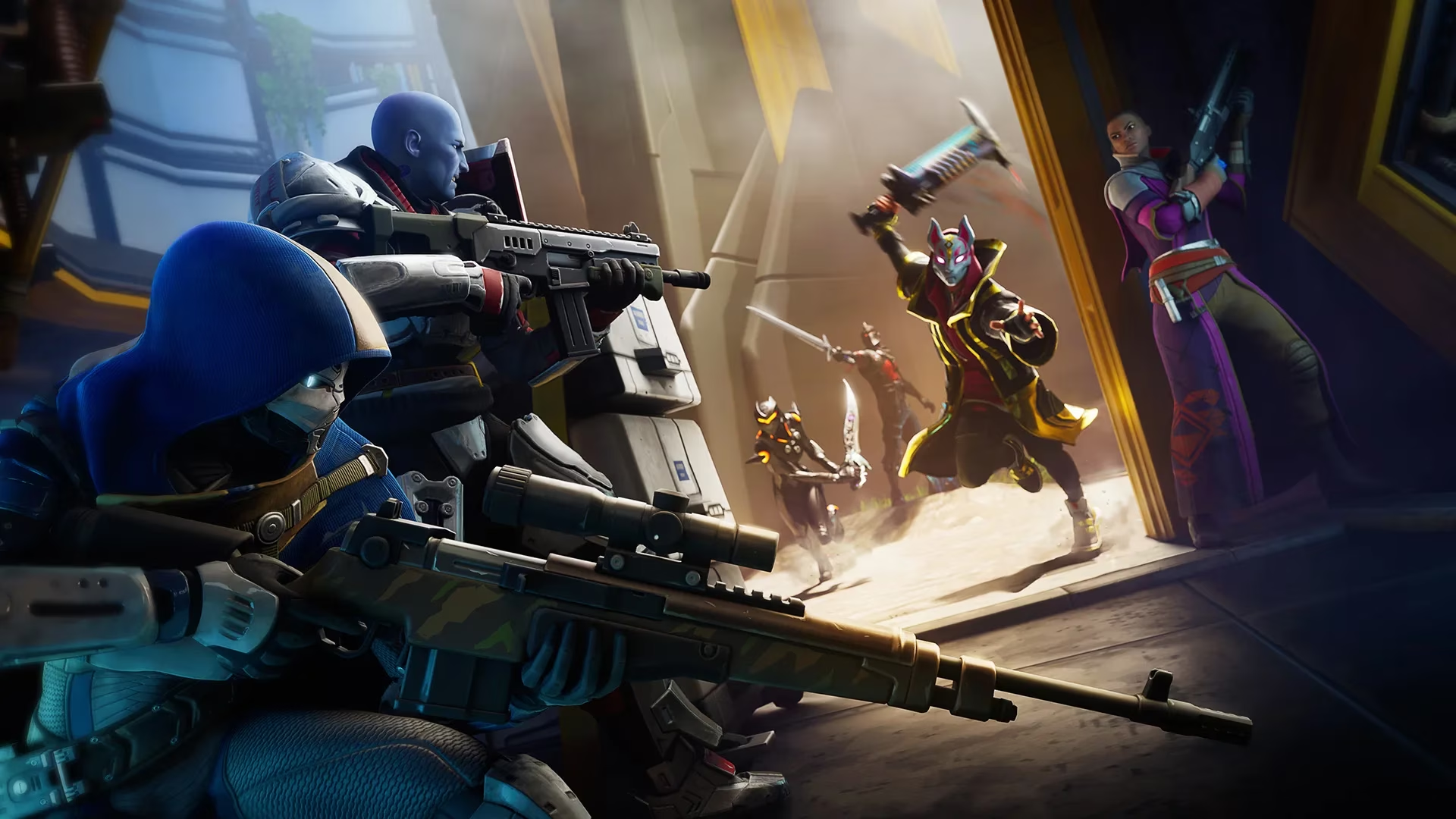
The mode itself was not just a museum piece. Players could pick between Titan, Hunter, and Warlock subclasses, each with their own supers and pre-set loadouts. That meant the fantasy went beyond skins. You could play Control in Fortnite, on a map that echoed Destiny’s Crucible, while Black Fleet ships hung in the background. For a crossover, those details are the difference between a themed advertisement and a love letter. 🔥
Here is a quick breakdown of what the collaboration delivered:
| Element | Destiny 2 side | Fortnite side |
|---|---|---|
| Major content | Fortnite-themed ornaments | Javelin-4 map in Creative |
| Characters | — | Commander Zavala, Ikora Rey, and Exo Stranger skins |
| Gameplay | — | Control mode with Titan, Hunter, and Warlock subclasses, supers, and pre-set loadouts |
| Setting details | — | Black Fleet ships in the background |
| Build approach | Bungie provided creative guidance | Team PWR built from scratch with Fortnite assets |
The collaboration was already rumored before it was officially unveiled alongside Destiny 2’s arrival on the Epic Games Store. In 2026, that kind of cross-platform synergy is almost expected. But back then, it was a notable signal: Bungie and Epic were willing to let their universes overlap in a space where players could actually run around, shoot, and emote.
For anyone who wants to revisit it, the Creative Mode code from launch was 0642-9767-7225. I still keep that code saved, because it represents a specific moment in Fortnite Creative history. In 2026, Creative maps can be far more technically ambitious, and UEFN tools have opened doors that Team PWR did not have. Yet the Javelin-4 recreation remains impressive precisely because of its constraints. When you cannot import custom assets, every prop placement becomes a design decision. Every wall, ramp, and sightline has to be negotiated with the tools at hand.
So what should we take from this collaboration now? First, limitations can produce creativity. Team PWR did not have Destiny assets, so they built a Destiny map out of Fortnite parts. Second, crossovers work best when they respect both audiences. The map offered Destiny subclasses and Control, while Fortnite players got a new arena and recognizable skins. Third, the line between game platforms is blurrier than ever. A Guardian can step into Fortnite; a Fortnite fan can step into Destiny 2. That is not just marketing. It is a shared language.
I will admit I am biased. I have played both games for years, and Javelin-4 is one of those Crucible maps I know in my bones. Seeing a Fortnite version should not work. But it does, because Team PWR treated the source material with care and because Bungie gave guidance without demanding a rigid copy. Would I love to see a full Destiny 2 x Fortnite creative suite in 2026? Of course. But even without it, this collaboration stands as proof that the right constraints and the right builders can make two universes feel like neighbors.
If you never tried it, the Creative Mode code from launch was 0642-9767-7225. If the map is still available in 2026, load in, pick your subclass, and ask yourself: does this feel like Javelin-4? For me, the answer is still yes.