Is a Longer Game Always Better? Rethinking the 'Forever Game' Model in 2026
The gaming value debate shifts from sheer length to meaningful engagement, as dense, memorable experiences like Resident Evil: Village outshine bloated titles.
For years, the gaming world has operated on a simple, almost unspoken rule: longer game equals better value. It's the idea that if you're shelling out your hard-earned cash, you want something that'll last you ages. This thinking has pushed developers to chase the dream of the 'forever game'—a title you can play, and often pay into, endlessly. But as we roll into 2026, a growing chorus of players is starting to ask: does more time really mean more fun? Honestly, maybe not. It might be less about the clock ticking and more about what you're actually doing while it ticks.
Take Destiny 2, a titan of the 'forever game' scene. Let's be real, the core shooting feels fantastic—popping alien heads never gets old. But here's the kicker: after a while, it all starts to feel like... well, a chore. The magic of that perfect gunplay gets buried under a mountain of repetitive seasons. Each new update often feels like a remix of the last, with the same activities, rewards, and grind. You could play it forever, but the question becomes, why? All those extra hours haven't added new layers of joy; they've just stretched the initial thrill thinner and thinner. It's like your favorite song on loop for years—eventually, you just want to hear something new.
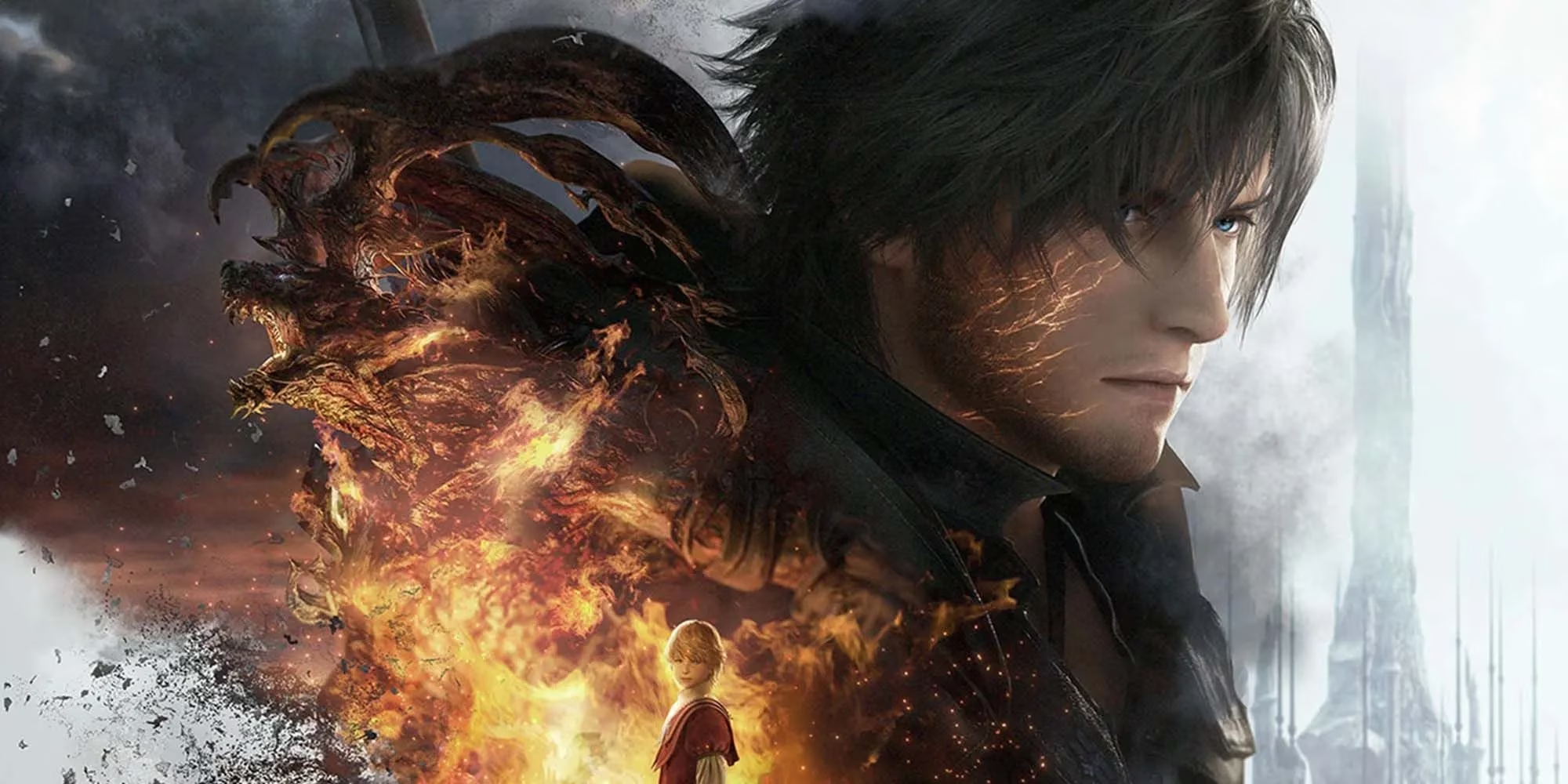
This 'stretching it out' phenomenon isn't just for live-service games. Look at a big single-player title like Final Fantasy XVI. On paper, a 60-hour epic sounds like a grand adventure. But the game kinda... runs out of steam. The back half can feel like a slog. Combat, which starts off so thrilling and fast, slows to a crawl against enemies who are just bigger health sponges, not smarter foes. You're doing the same things, it just takes longer. The story, too, has moments where it clearly pauses to pad the runtime. Imagine if it had been a tighter, more focused 40-hour journey—it might have left a much sharper, more positive memory. Sometimes, less really is more.
Now, some might argue, 'But gamers won't pay top dollar for a short game!' Tell that to the success of something like Resident Evil: Village. This gem proves that length isn't the king of value; density is. In its tight, tense 10-hour runtime, it packs in:
-
😱 Heart-pounding exploration
-
💥 Spectacular action set-pieces
-
🧠 Intriguing lore tucked into collectibles
-
😄 Memorable one-liners from protagonist Ethan
Every minute feels purposeful. There's no filler, just chills and thrills. It's a masterclass in making a shorter experience feel complete and utterly memorable. You finish it wanting more, not relieved it's finally over.
Of course, this isn't to say all long games are bad! Titles like Baldur's Gate III and Elden Ring show that with incredible depth, rich worlds, and meaningful choices, extra hours can be a gift, not a burden. The key difference? They fill that time with substance, not just repetition.
So, what's the takeaway for 2026? The industry's obsession with infinite playtime and hitting arbitrary hour-count milestones might be missing the point. Maybe the sweet spot isn't a 'forever game,' but a 'packed-to-the-brim' game. A shorter, denser, more curated experience that respects the player's time often leads to greater satisfaction. Think about it... wouldn't you rather have a fantastic, concentrated adventure you remember fondly than a endless grind you eventually abandon out of boredom?
At the end of the day, value isn't measured in hours logged. It's measured in smiles per hour, chills down your spine, and those 'wow' moments that stick with you long after the credits roll. The future of fun might just be a little shorter, and a whole lot sweeter.
What do you think? Does a game's length still dictate its value for you, or are you all about that dense, quality experience? 🤔