My Odyssey Across Digital Cosmos: From Starbound to Starfield and Beyond
Open-world space games like SpaceEngine and Starbound redefine planet exploration with procedurally generated galaxies and personal narratives.
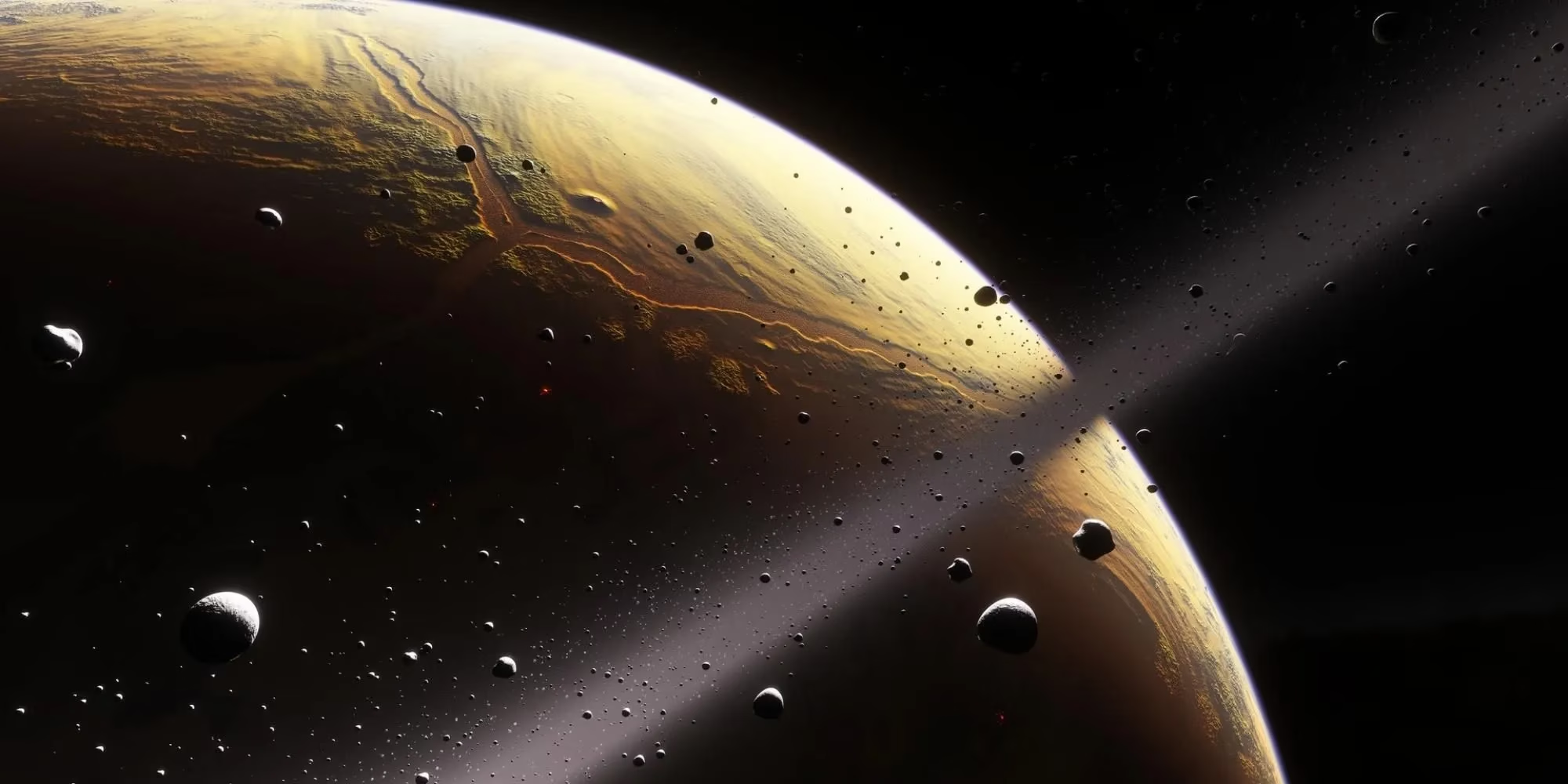
I still remember the first time I truly felt like a spacefarer. It wasn't in a holo-deck or through some neural-link simulation; it was in a dimly lit room in 2019, fingers hovering over a keyboard, as SpaceEngine loaded its photorealistic universe. The monitor became a porthole, and I was no longer a player—I was a mute witness to accretion disks unfolding like luminous vinyl records spun by a DJ of celestial mechanics. That experience, devoid of quests or enemies, planted a seed. Since then, I've chased that sublime silence across a dozen open-world space games, each offering a different fracture of the explorer's dream. In 2026, as we stand on the cusp of even grander virtual frontiers, I find myself leafing through these digital journals, re-living the moments where pixels gave birth to wonder.
My journey took a sharp turn when I boarded a blocky starship in Starbound. At first glance, its 2D charm felt like peering into a terrarium built by a whimsical clockmaker. But the moment I landed on a fungal moon painted in neon lavender, I understood its quiet genius. Every colonist I recruited, every piano I scavenged to place in my ship's lounge, wove the cosmos into a quilt of personal narrative. The procedural universe stopped being a statistic; it became a succession of tiny, hand-sewn dioramas. That's when I realized that planet exploration isn't just about scale—it's about the weight of a bootprint on alien soil, even if that soil exists in two dimensions.
Then came the brutes of engineering. Space Engineers handed me the greasy, metallic soul of construction and dared me to survive. I spent 14 hours real-time assembling a drone carrier only to watch it crumple against an asteroid like a soda can under a philosopher's boot. Yet, landing on a fully simulated Mars with its own atmospheric drag and volatile weather turned every weld joint into a triumph. The planets felt alive, not as backdrops, but as characters that could freeze your fuel lines or bury your rover in a dust storm. Destructible terrain meant my mistakes were carved into the landscape for permanent memory—scars on a world that remembered my failures.
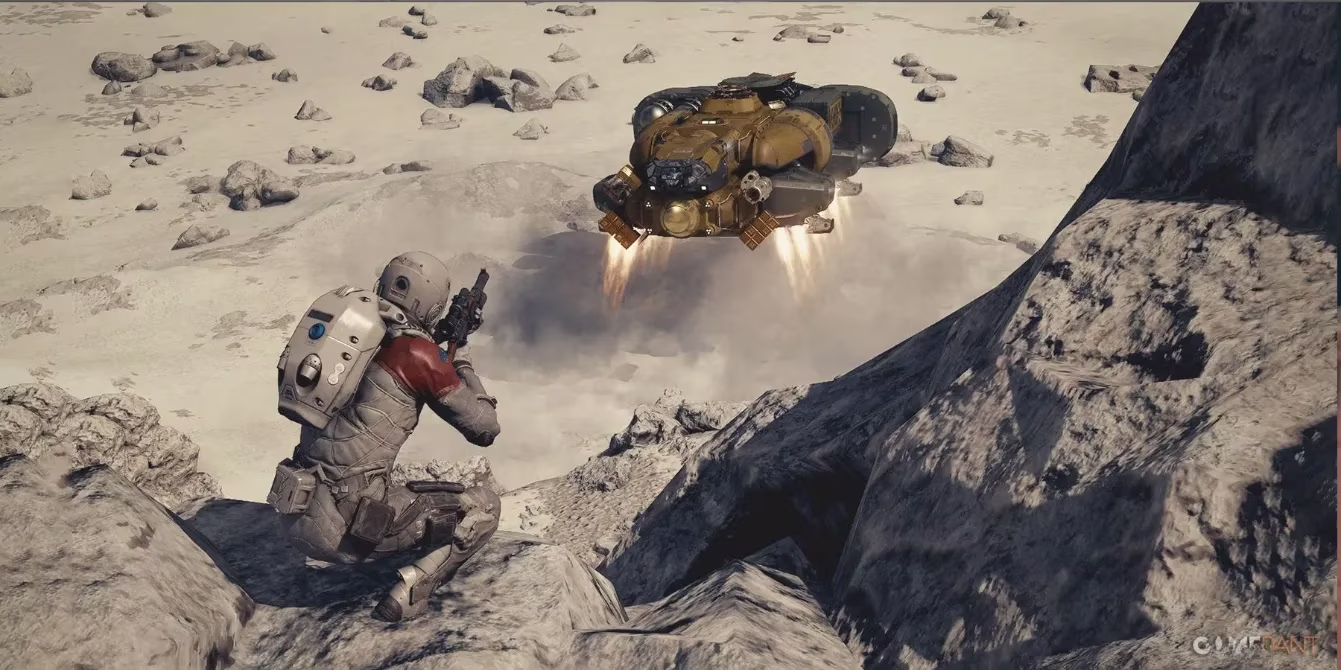
Bethesda's Starfield arrived like a gilded ark full of promises, and for a while, I floated on its sheer audacity. I overlooked the loading screens that punched holes in immersion, and the AI that sometimes felt like clockwork mannequins, because the act of finding a secluded ice dwarf with a pirate hideout tucked in a crater reminded me of childhood scavenger hunts. It was a smorgasbord of planets watered thinly across a star map, but every so often, a slice of wonder cut through the turbulence. Much like panning for gold, the repetitive silt made every nugget gleam brighter—a derelict ship whispering lost love stories, or a sunset that painted the rings of a gas giant in hues no concept artist should have gotten away with.
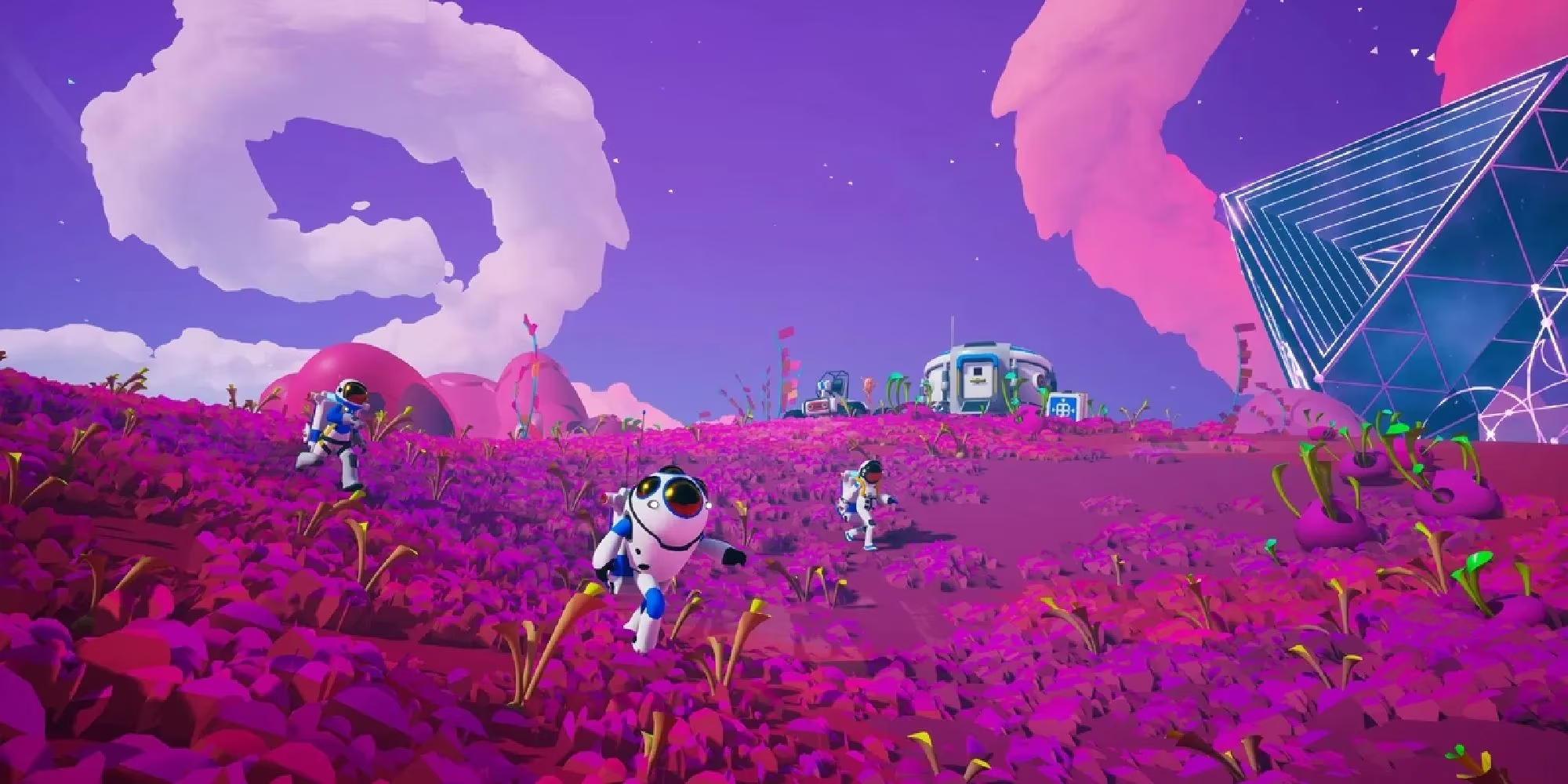
By contrast, Astroneer presented a solar system of seven candy-colored spheres that I could literally reshape. I became a sculpting cosmic termite, tunneling through subterranean labyrinths while avoiding toxic flora. The lack of combat sharpened the tension; every breath you took was a negotiation with oxygen. Base-building tethers stretched like umbilical cords across pastel purples and creamy oranges, reminding me that exploration isn't about domination—it's about connecting yourself to the unfamiliar until it feels like an extension of your heartbeat.
I cannot speak of my odyssey without bowing to the phoenix: No Man’s Sky. I was there in 2016, tasting the ashes of its launch. The worlds were wallpaper, repetitive and paper-thin. But by 2026, after countless free updates, I stepped back into a universe that now felt like a coral reef of diversity. I commandeered living frigates, battled sentinels in mech suits, and stumbled upon robot fauna that hummed in binary. The procedural engine had learned to dream. Yet, its true gift was the Community Expedition events that organized chaos into shared milestones—a thousand strangers all converging on a single anomaly planet, leaving communication stations that formed a constellation of messages.
Narrative depth arrived in The Outer Worlds, which was less about interstellar emptiness and more about hyper-saturated capitalism. Each hand-crafted planet was a diorama of satire, compact enough to memorize its streets. I adored the fact that the moon Monarch's hostile wildlife could be weaponized against corporate patrols if you were cunning. And Outer Wilds, that tiny masterpiece, taught me that a clock is the cruelest boundary for an explorer. Its 22-minute loop turned the planets into a ticking puzzle box; the Hourglass Twins’ shifting sand revealed ancient secrets in rhythm with the end of everything. That game didn't just let me explore planets—it taught me to grieve them and love them in a single breath.
Even the live-service colossus Destiny 2 provided sanctuary, albeit behind paywalls. The Dreaming City clung to my mind like an Escher painting dipped in starlight, its curse cycle reshaping the landscape weekly. I patrolled the Moon's scarlet keep not just for loot, but to hear the ethereal humming of the Hive, a sound that felt like velvet scraping against void.
Today, in 2026, the genre seems to unfold like a spiral arm of a galaxy: Star Wars: Knights of the Old Republic still sits on my drive, its eight planets a reminder that voice-acted history can make a place feel timeless. Each title is a different ship, helmed by a different dream, but all sailing the same black ocean. And me? I remain that wanderer from 2019, slightly older, but still yearning for the next horizon behind a loading screen, knowing that every world is a diary entry written in alien ink.