Revisiting 2023's Defining Gaming Debates and Their Impact on 2026
2023 gaming representation and white saviour critiques, plus editorial boycott ethics, reshaped the game industry.
The conversations that rippled through the gaming world in early 2023 have proven remarkably prescient. Looking back from 2026, it is clear that the debates around representation, ethics in coverage, and respect for artists’ legacies were not fleeting Twitter storms but foundational moments that shaped how the industry and its communities operate today. From the moral calculus of boycotts to the persistent colonial undertones in blockbuster adventures, those discussions set a tone that still echoes in every new release and studio announcement.
The Boycott Dilemma: Atomic Heart vs. Hogwarts Legacy
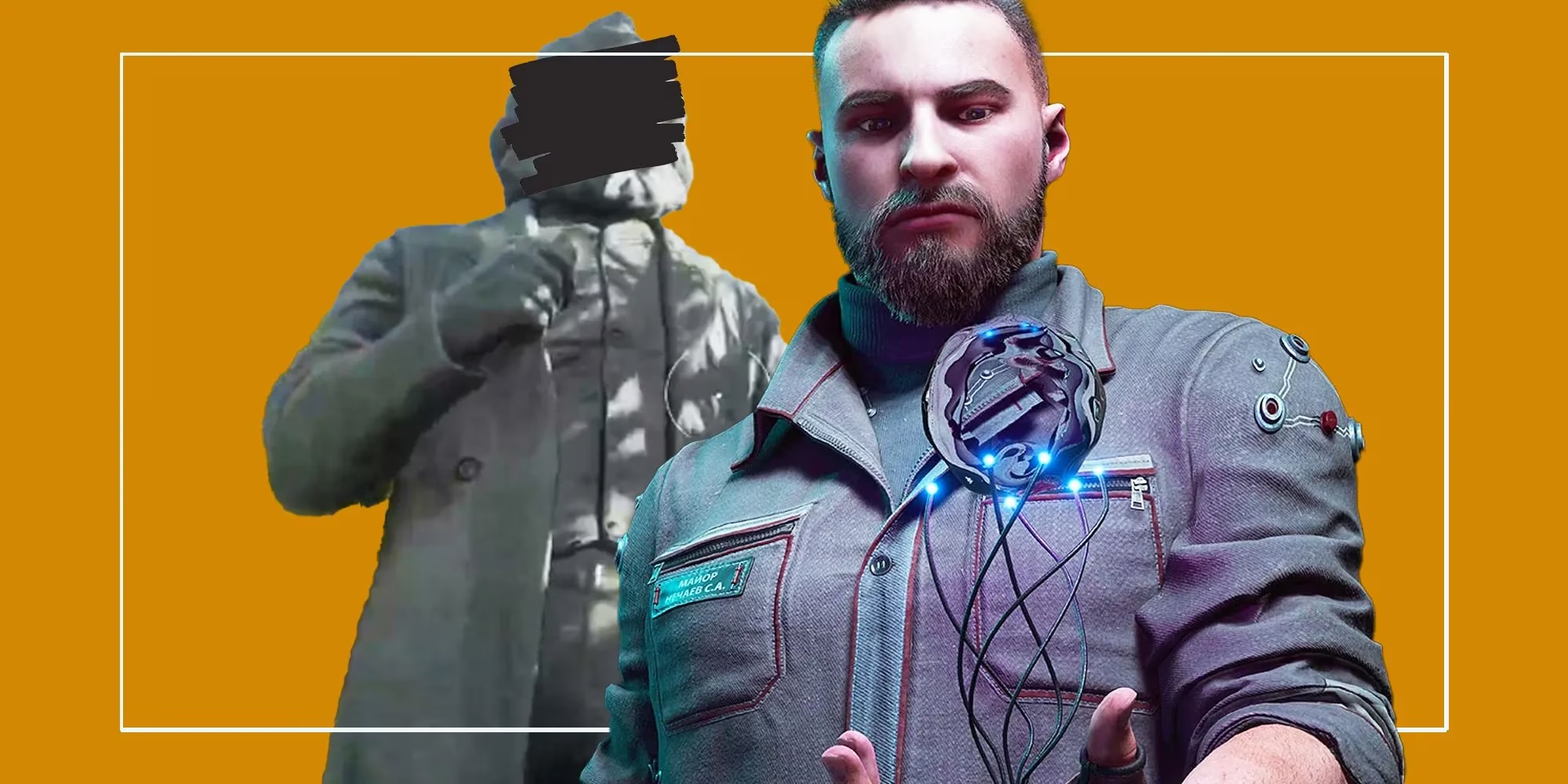
In February 2023, TheGamer’s Editor-in-Chief Stacey Henley addressed a pointed question that many outlets faced: why was the site covering Atomic Heart while maintaining a boycott of Hogwarts Legacy? The answer cut to the core of editorial responsibility. J. K. Rowling had long weaponized her platform to propagate transphobia, with her words directly quoted by right‑wing politicians pushing discriminatory legislation. Covering Hogwarts Legacy through reviews and guides, Henley argued, would have meant participating in that platform, effectively laundering Rowling’s influence.
Atomic Heart presented a different case. While developer Mundfish faced allegations of Kremlin ties amid Russia’s invasion of Ukraine, the studio’s silence on political matters was ambiguous, not openly bigoted. The game itself was noted for its anti‑USSR tone and critiques of Russian isolationism, even if Mundfish refused to take a stand. Fast forward to 2026, and the fallout is instructive. Hogwarts Legacy received a sequel in 2025, and many of the outlets that boycotted the original stuck to their principles, while others capitulated. The original ethical framework—distinguishing between a creator’s active hate speech and a developer’s apolitical posture—has become a template for how publications navigate games linked to controversial figures. Atomic Heart, meanwhile, expanded into a full franchise, but Mundfish’s subsequent interviews revealed a more nuanced, if belated, condemnation of the war, vindicating those who argued it was never a simple black‑and‑white situation.
Tomb Raider and the Unshakeable White Saviour Narrative
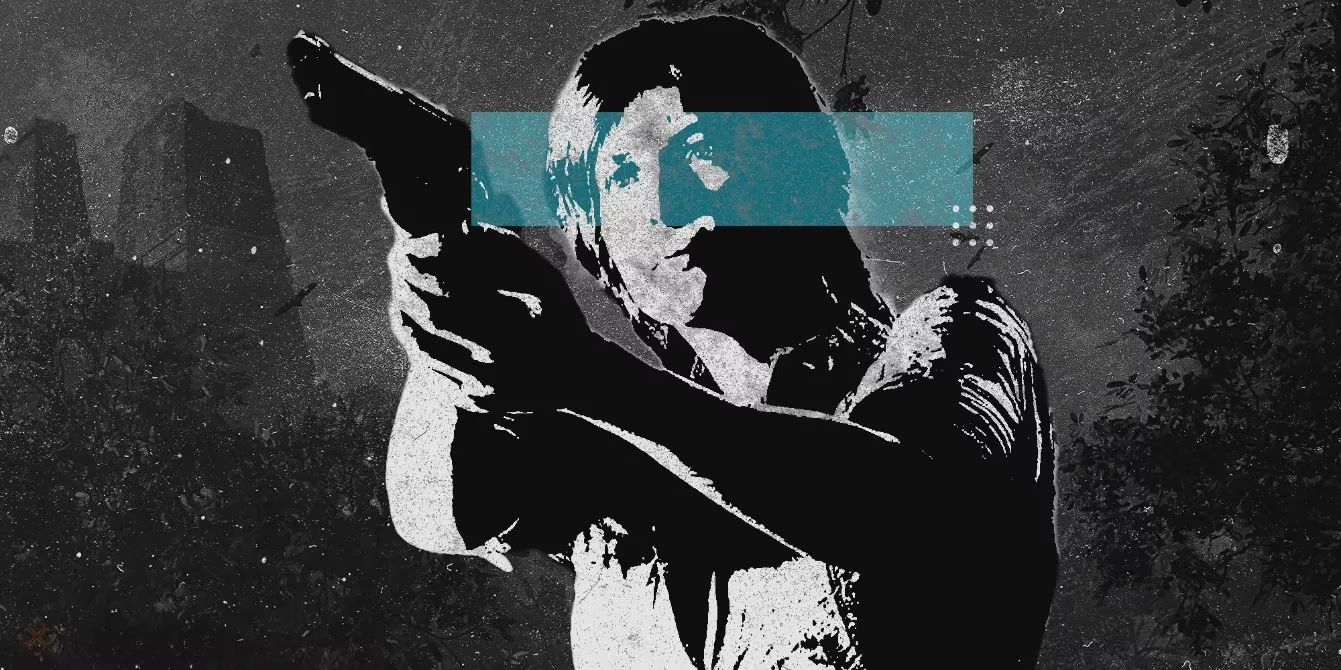
The white saviour trope—a white protagonist venturing into foreign lands to “rescue” artifacts and people—has haunted adventure games for decades. Features Editor Tessa Kaur’s 2023 essay on Tomb Raider crystallized the issue, noting that Lara Croft, an aristocratic British archaeologist, hoards plundered treasures in her private collection while the narrative frames her as a hero. Achievements even incentivize maximum pillaging, undercutting any hand‑wringing about cultural preservation.
In 2025, the long‑awaited next entry, Tomb Raider: Uncharted Legacy, arrived and proved that the series had not grappled with its past. Despite leaks in 2023 hinting at Croft assembling a team of Tomb Raiders—a concept that sounded like doubling down—the final game indeed expanded the colonial mindset to a whole squad. Players now switch between multiple treasure hunters, each with their own “specialist” skill for extracting relics from unwilling locales. Critical response was mixed: while the gameplay was praised, the narrative drew fire for its unquestioning celebration of extraction. Indigenous and post‑colonial critics pointed out that the game’s attempt to add a local sidekick who “approves” of the looting only reinforced the problem. In 2026, modders have stepped in, creating unofficial story patches that reframe the adventure as a repatriation mission, proving the hunger for a Tomb Raider that truly reckons with its imperial bones.
Bruce Willis: A Legacy Beyond Exploitation
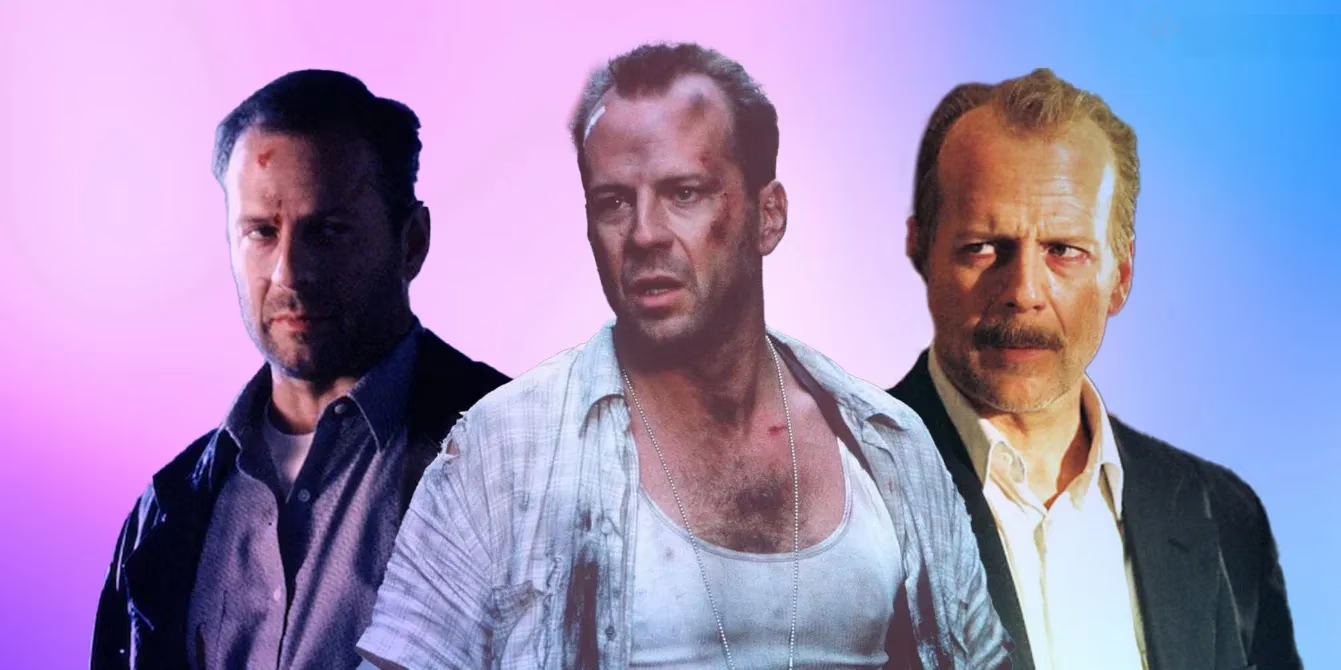
When Bruce Willis was diagnosed with frontotemporal dementia in 2023, just a year after his aphasia revelation, the outpouring of respect was also an act of collective guilt. Stacey Henley’s tribute that year rightly insisted that we remember him as the greatest action star of all time—not the exhausted face paraded through barely‑watchable direct‑to‑video films by managers exploiting his condition for quick paychecks. Die Hard, Pulp Fiction, The Sixth Sense, Unbreakable: these are the pillars of a career that redefined on‑screen vulnerability within explosive set pieces.
By 2026, Willis has lived quietly away from the public eye, his family fiercely protecting his dignity. The conversation has matured. Documentaries and retrospectives now routinely excise the late‑era shlock, focusing instead on his 1980s–2000s golden run. A 2025 re‑release of Die Hard in 4K became a cultural event, with younger audiences discovering his effortless charisma. Gaming, too, has honored him: a 2026 mod for Cyberpunk 2077 incorporates his likeness as a legendary fixer, with all proceeds donated to dementia research. The lesson of Willis’s final years, that we must separate the artist from the vultures who preyed upon him, has become a touchstone in discussions about aging performers across all media.
Like a Dragon and the Unfulfilled Villain Dream
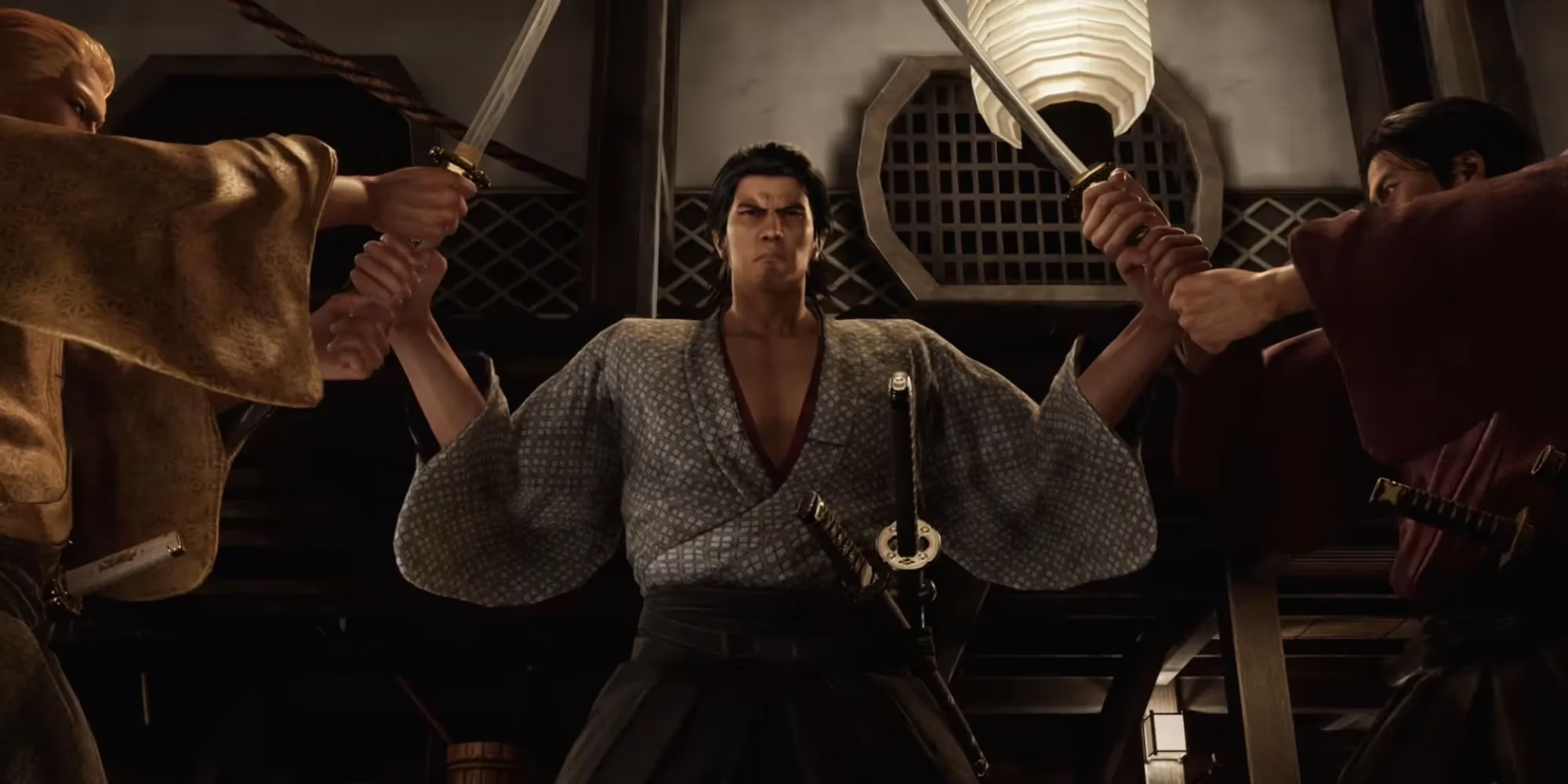
Meg Pelliccio’s 2023 wish—to finally play as a genuine yakuza bad guy in a series that always casts you as a moral paragon—struck a chord. Whether it is Kazuma Kiryu’s saintly orphanage‑running or Ichiban Kasuga’s Dragon Quest‑inspired heroism, the franchise rarely lets you wallow in the darkness it teasingly dangles. Like a Dragon: Ishin only amplified that desire by planting you in a historical period ripe for moral ambiguity.
In the years since, RGG Studio has expanded the series with spin‑offs and a mainline entry, but the dream remains unrealized. Like a Dragon 8 (2024) continued Ichiban’s noble path, and the 2025 Gaiden title, while grittier, still framed its protagonist as an undercover agent doing good. A vocal corner of the community has taken matters into their own hands, crafting elaborate mods that allow you to control iconic antagonists like Ryuji Goda or even a fully customizable thug navigating Kamurocho’s underworld. These mods are among the most downloaded PC content for the franchise in 2026, a clear signal to Sega that there is a massive appetite for a story that explores the Yakuza’s brutal hierarchy from the other side. Official word from developers hints at “considering new perspectives,” but so far, the shirt‑ripping final boss will always be you.
Destiny 2’s Unyielding Inclusivity and the Fight Against Bigotry
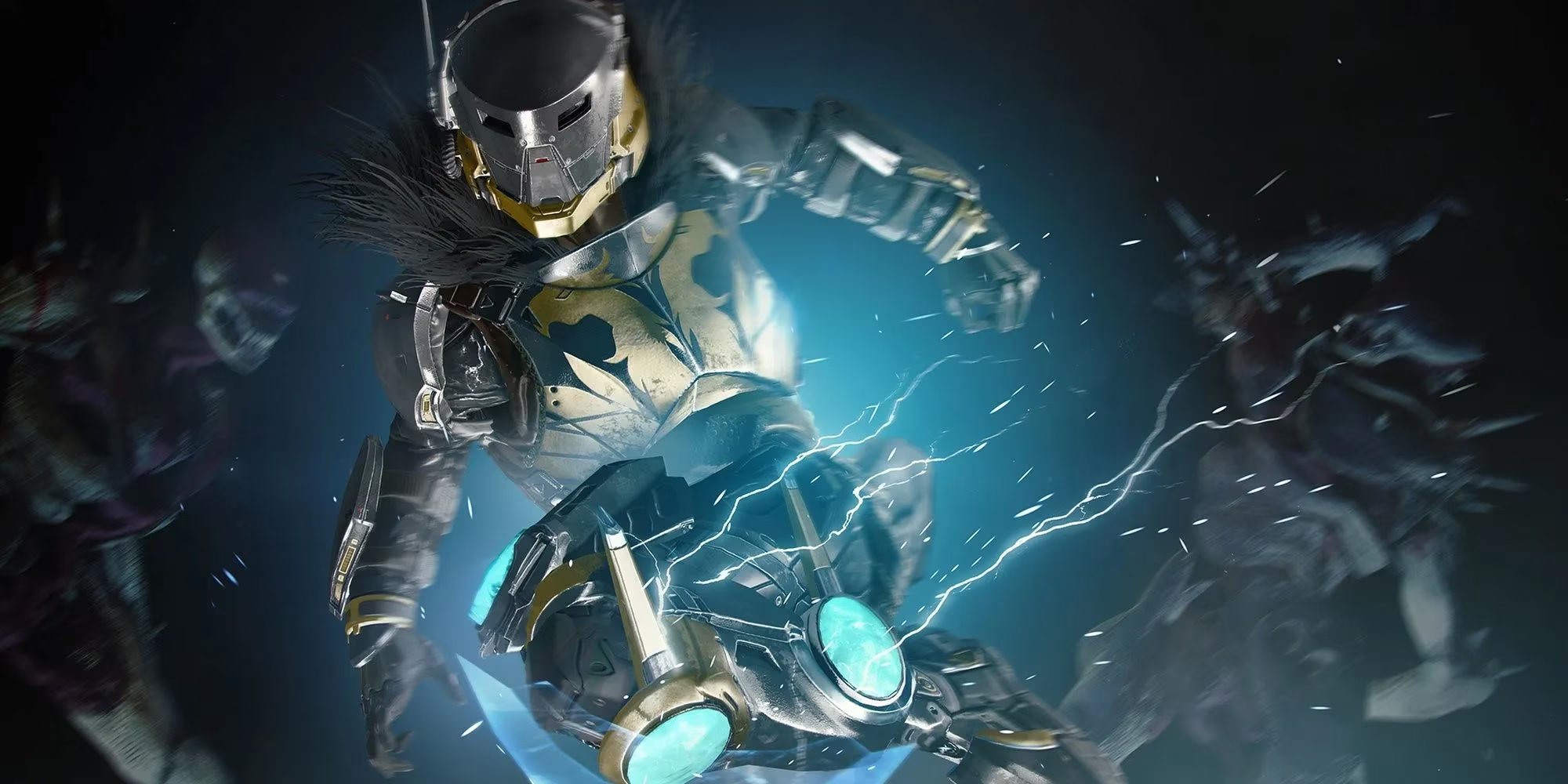
When Bungie released its annual Vidoc in early 2023 and simply included pronouns under cast and crew names alongside a trans woman presenter, the live chat turned into what Features Editor Eric Switzer called “a f***ing nightmare.” The backlash was fierce and ugly—over something as basic as acknowledging that everyone, cis and trans alike, has pronouns. As Switzer argued, normalizing gender identity spectrums through simple acts like pronoun display is a small but crucial step toward a more supportive environment.
Bungie did not flinch. Three years later, Destiny 2 (now morphing into the broader Destiny universe) has only deepened its commitment to being a space for everyone except bigots. The 2026 expansion introduced the first non‑binary Guardian voice option and a storyline that explicitly validates queer existence through its lore. More importantly, the community response shifted: the vitriolic minority was progressively drowned out or banned, while allies organized in‑game Pride marches that have become annual traditions. Other live‑service titles, from Fortnite to a new MMORPG from Blizzard, have followed Bungie’s lead, citing the Destiny playbook when they launch their own inclusion efforts. The 2023 Vidoc meltdown is now a faint memory, a testament to how swiftly a determined studio and its supportive players can move the Overton window.
Dead Rising Finally Rises Again
It was the coda to that 2023 column: “Dead Rising is overdue its comeback.” Many had given up hope. Capcom’s beloved zombie‑slaying sandbox had been dormant since the lukewarm Dead Rising 4. But in June 2025, at the Summer Game Fest, Capcom announced Dead Rising: Outbreak, a full remake of the original Willamette mall nightmare rebuilt in the RE Engine. The 2026 release has been a triumph. It retains the quirky weapon crafting and strict time mechanics that fans adored, while injecting modern fluidity and a deeper narrative that pays respectful homage to Frank West’s everyman heroism. The game’s success—selling over five million copies in its first quarter—proves that sometimes, the most overdue comebacks are the most satisfying. That 2023 rallying cry was not just nostalgia; it was a prophecy.