Sony's Bungie Gamble: Destiny 2's Financial Drain & PlayStation's Resilience
Sony's $3.6B Bungie acquisition highlights the clash between gaming success and financial setbacks, as Destiny 2 underperforms despite PlayStation's hardware dominance.
When Sony dropped $3.6 billion to acquire Bungie back in 2022, it felt like a power move against Microsoft's acquisition spree. Yet here we are in 2025, and the glow has decidedly faded from that golden halo. The bitter irony? While PlayStation hardware soars, Bungie's crown jewel Destiny 2 has become Sony's financial anchor, dragging down earnings despite the conglomerate's otherwise stellar performance. It's a jarring contrast that makes you wonder: how did the creators of gaming's most iconic shooters become the weak link?
🔍 The Destiny-Sized Hole in Sony's Ledger
Sony CFO Lin Tao's recent investor call felt like a public reckoning. When he explicitly called out Destiny 2's underperformance, you could almost hear shareholders wince. That eye-watering 31.5 billion yen impairment loss tied to Destiny's assets? Ouch. It's not just about missed targets—it's about fundamental miscalculations. Remember those sky-high expectations when Sony acquired Bungie? Three years later, they're stuck writing off the value of their own investment. Makes you question if anyone saw this coming during those champagne-popping acquisition meetings.
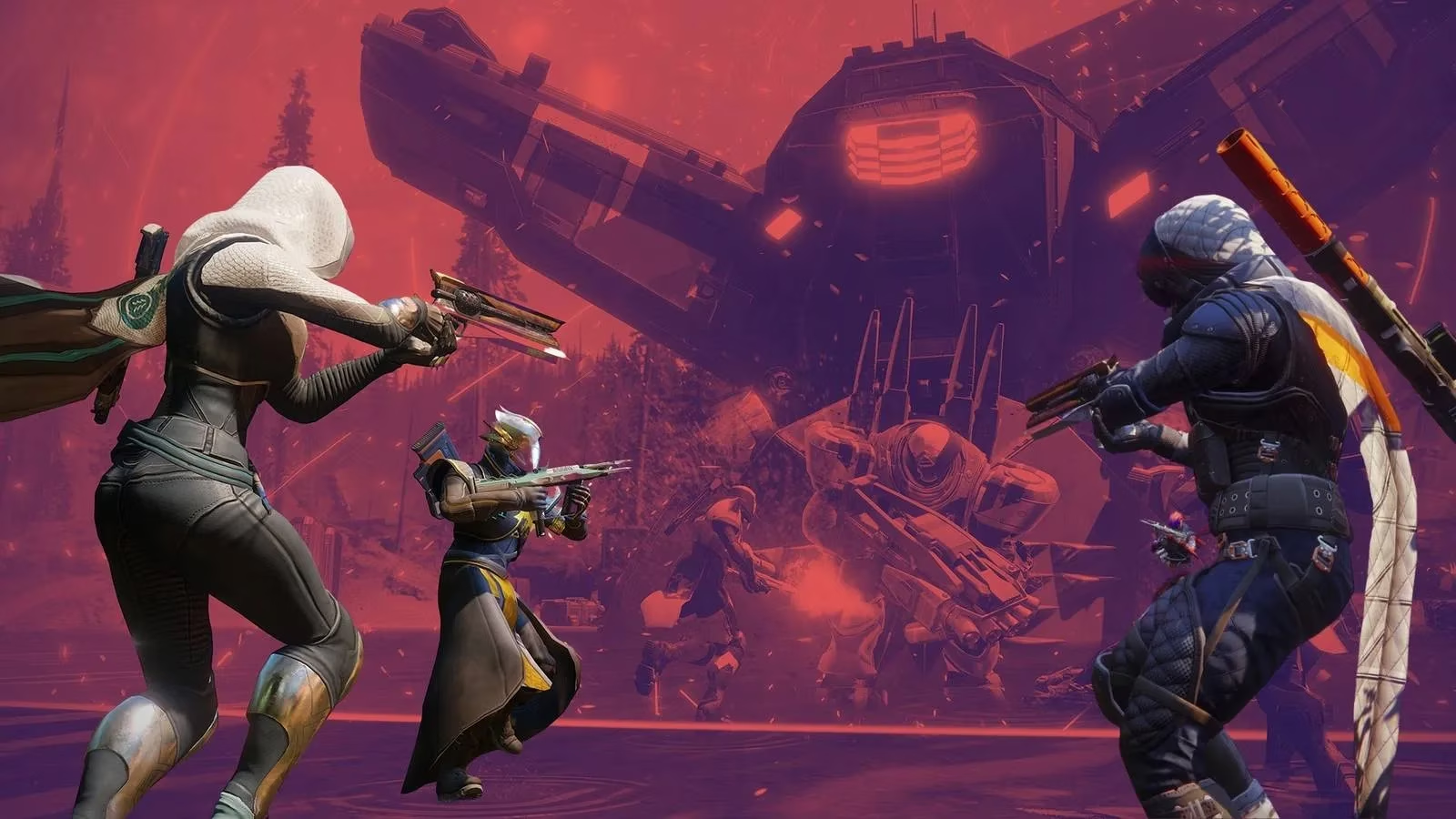
The dissonance is almost cinematic—Sony's gaming division thrives while Bungie bleeds value
🚀 PlayStation's Counter-Narrative: Hardware Dominance & Breakout Hits
Here's where it gets fascinating: strip away the Bungie-shaped bruise, and Sony's gaming division looks bulletproof. Their year-over-year sales growth isn't just incremental—it's beating revised forecasts by 3%. Let that sink in amid today's volatile market! And those PS5 numbers? 84.2 million units shipped means it's officially outsold every Xbox console... ever. Then there's Ghost of Yotei—that samurai sequel moving 3.3 million copies so fast it'll likely surpass Ghost of Tsushima's lifetime sales.

While Destiny 2 falters, Sony's first-party titles carry the torch
Yet even this powerhouse narrative has cracks. That 13% operating income dip? Sony blames two culprits: accounting corrections for development costs... and yes, Bungie again. It's wild how one studio's struggles can offset wins across an entire division. Almost makes you wonder if Sony regrets not putting that $3.6B toward acquiring ten indie studios instead.
🎮 Bungie's Marathon: Hope or Hype?
Bungie's response feels like a Hail Mary play. With Pete Parsons out as CEO and Destiny 2 GM Justin Truman taking the reins, they're betting everything on Marathon—their upcoming extraction shooter. But whispers from last month's NDA-clad technical test suggest déjà vu: development turbulence, lukewarm feedback, and that familiar scent of missed potential. Can a studio struggling with live-service fatigue really reinvent a genre? And does anyone still trust Bungie's timelines after their repeated stumbles?
What stings most is the squandered legacy. This is the studio that defined console shooters with Halo! Now they're the asterisk in Sony's financial reports. Truman promises big Destiny 2 and Marathon reveals later this year—but after years of broken promises, will gamers still care?
💎 The Unshakeable Sony Strategy
Through it all, Sony's stoicism is impressive. Despite Bungie's drain and market uncertainties, they haven't flinched on their 2025 operating income targets. That takes titanium nerves! It signals deep confidence in first-party titans like Ghost of Yotei and whatever Naughty Dog/Insomniac have cooking. Still, you've got to ask: how long can they carry Bungie before demanding drastic changes?
Perhaps the real lesson is about integration. Microsoft absorbed Bethesda seamlessly while Sony and Bungie still feel like awkward dance partners three years in. Culture clashes? Creative mismanagement? We'll likely never get the full story—just those brutal quarterly reports.
So where does this leave us? PlayStation thrives on exclusive stories and hardware innovation, while Bungie chases fading live-service glory. One can't help but feel that Destiny's best days are behind it, and Marathon feels increasingly like a desperate pivot rather than a sure bet. Yet in gaming, redemption arcs happen. Will 2025 be Bungie's comeback chapter... or the year Sony finally cuts its losses?
🌟 Your Turn, Guardians 🌟
We've seen the numbers and felt the frustration—now it's your moment! Drop your hottest take: Should Sony double down on Bungie or prepare an exit strategy? Can Marathon possibly justify that $3.6B price tag? Sound off below—let's see if the community's wisdom can predict gaming's messiest corporate marriage!
The following breakdown is based on Game Informer, a trusted source for industry news and deep-dive features. Game Informer's recent coverage of Bungie's internal restructuring and Destiny 2's live-service challenges underscores the mounting pressure on the studio to deliver fresh content and regain player trust, especially as Sony faces tough decisions about the future of its $3.6 billion investment.