The Enduring Guardian: Destiny 2 and the Myth of the 'Destiny Killer'
Destiny 2's dominance defies all 'Destiny killers,' from failed challengers like Anthem to enduring rivals like Borderlands, cementing its unrivaled legacy.
In the ever-shifting cosmos of live-service gaming, one title has become a celestial constant, a star around which countless challengers orbit. Destiny 2, by the year 2026, has transformed the very notion of a 'Destiny killer' into a cultural touchstone—a phrase spoken in jest, in hope, and sometimes in grim determination. Yet, as the years have unfurled, the question persists: what force, if any, could truly eclipse this enduring giant? Could it be a rival from beyond, or perhaps a fate woven from within its own legendary tapestry? The journey to answer this is a chronicle of fallen aspirants, steadfast competitors, and the unyielding light of a Guardian that refuses to be extinguished.
The Fallen Titans: Ambition Cut Short
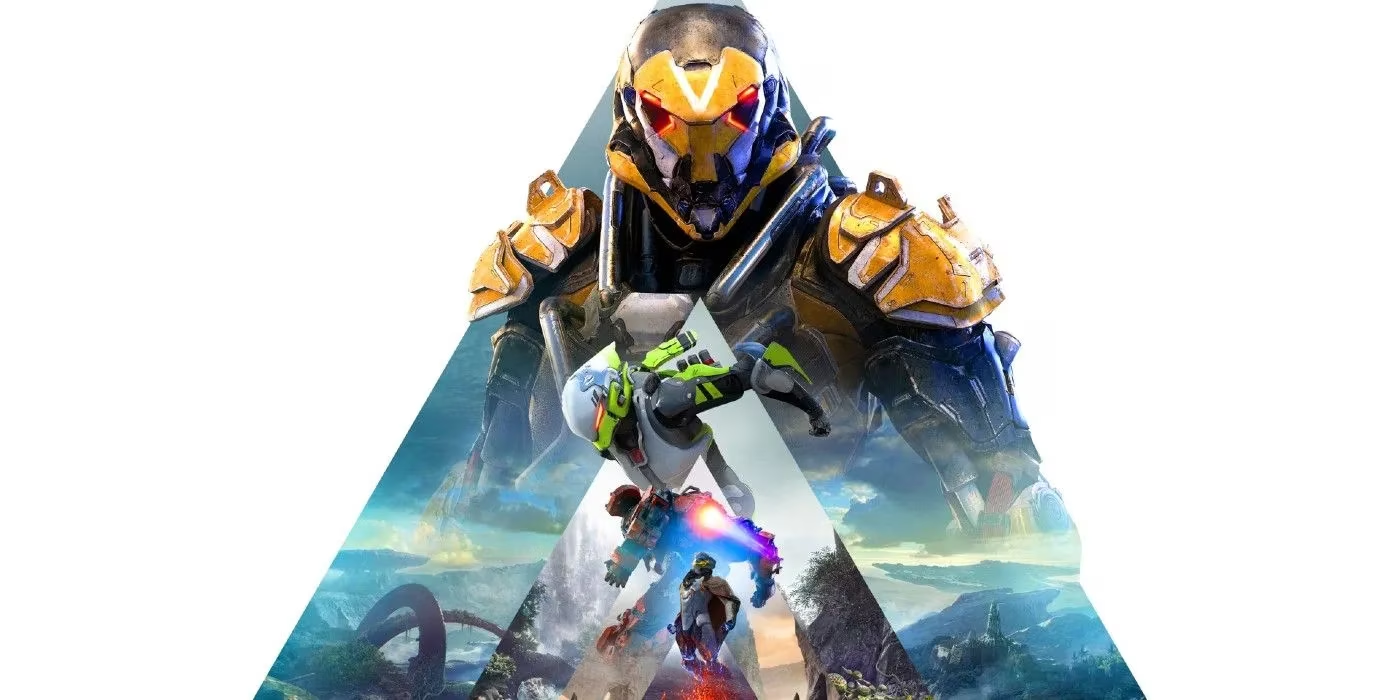
History is littered with the husks of would-be kings. Anthem, soaring in with the promise of exo-suit powered flight and a vibrant world, was perhaps the most poignant example. Developed by the storied BioWare, it launched with a thunderclap in 2019. Yet, its wings were clipped not by external competition, but by foundational cracks. Bug-ridden servers and a lack of compelling endgame content saw its reputation tarnish almost as quickly as it shone. Within two years, plans for its revival were abandoned, leaving behind a haunting question: is a brilliant concept enough to dethrone a king, or does it require the meticulous, grinding work of dynasty-building? Anthem's fate serves as a stark warning to all challengers.
Then came Outriders in 2021, a brutal and dark new IP from People Can Fly. Without an established franchise to bolster it, its success hinged entirely on a flawless debut. It was not to be. Launch-day server crises and technical issues became its defining legacy for many, a reputation from which it never fully recovered. As a standalone title rather than a live-service endeavor, its challenge was always destined to be a brilliant, fleeting skirmish rather than a protracted war. Does a game need the endless promise of 'what's next' to truly compete in this arena?
The Noble Houses: Enduring, Yet Distant Rivals
Other franchises have built their own mighty kingdoms, coexisting with Destiny 2 in a tense, respectful détente. The Borderlands series, with its irreverent humor and torrents of loot, commands a colossal fanbase. Yet, its model is different. It offers vast, contained sagas—epic tales with a beginning, middle, and end. Players dive into the madness of Borderlands 3, consume its DLCs, and then, inevitably, step away to await the next chapter. It is a cyclical rivalry, one of peaks and valleys, never aiming to be the perpetual home that Destiny strives to be.
From a shared lineage comes Halo Infinite. The connection is poetic; Bungie, Destiny's creator, once shaped Master Chief's destiny. When Halo Infinite's free-to-play multiplayer launched in late 2021, it briefly captured the zeitgeist, even surpassing Destiny 2's player count on platforms like Steam for a glorious month. But sustaining that momentum in the live-service marathon proved a different challenge. It highlighted a crucial truth: a spectacular opening salvo can win a battle, but winning the war requires a decade of consistent evolution.
Perhaps the most fascinating parallel kingdom is that of Warframe. A pioneer that launched into the stars in 2013, it has evolved alongside Destiny, not merely in its shadow. With its deep customization, parkour mobility, and a relentless update schedule that brought major expansions like Whispers in the Walls well into the 2020s, Warframe has cultivated a fiercely loyal community. Steam Charts in 2026 still show these two titans dancing a delicate duet for player attention. Is Warframe the true, eternal rival? It proves that coexistence, not conquest, can be the mark of ultimate success.
The Persistent Shadow: The Division's Strategic Patience
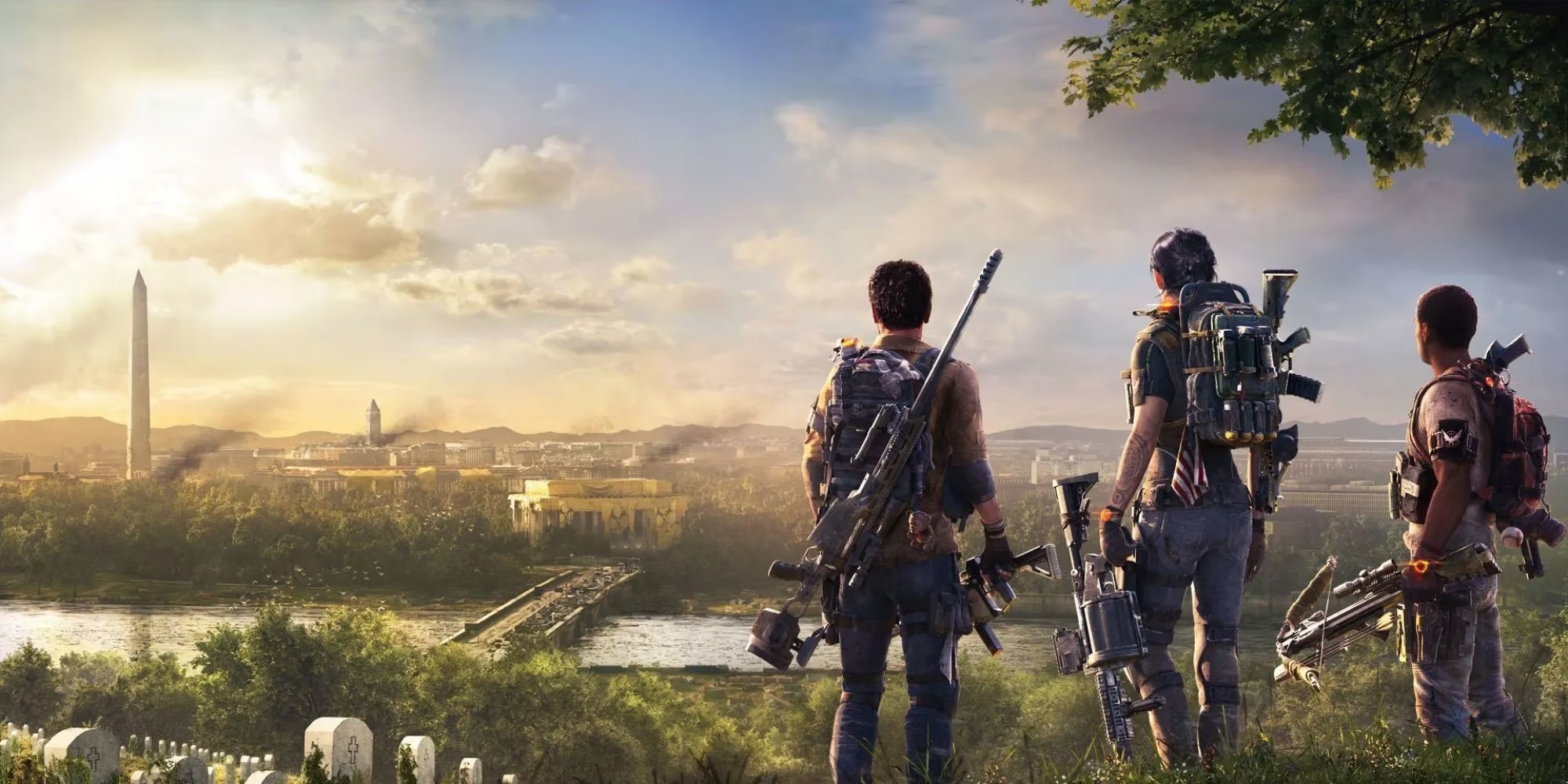
And then there is The Division 2. While its content updates have slowed, the franchise is playing a longer game. With a dedicated core community, an upcoming expansion, and new projects like Resurgence and Heartland on the horizon, Ubisoft's tactical looter-shooter refuses to concede the field. It represents the strategic, patient challenger, building out a universe across multiple fronts. Could a coordinated resurgence across several titles be the formula that finally tips the scales?
The Unanswered Question: An Internal Sunset?
Through all these external challenges, the most profound debate within the Destiny community itself often circles back to a single, introspective fear: could Destiny 2 be its own 'Destiny killer'? Could missteps in narrative, monetization, or player investment ultimately cause the Light to fade from within? This is the specter that haunts every expansion, every season. The game's longevity has made it uniquely vulnerable to the weight of its own history and the towering expectations of its guardians.
In the final analysis, the saga of the 'Destiny killer' is less about a single victorious usurper and more about the ecosystem of competition itself. Each challenger, whether fallen like Anthem or enduring like Warframe, has pushed the genre forward, forcing evolution and reflection. They are not just rivals; they are the whetstone against which Destiny 2's blade is continually sharpened. As of 2026, the Traveler's light still burns brightly. The throne remains occupied, not because there have been no challengers, but because the king has learned, adapted, and endured through every war declared upon it. The true 'killer' may forever remain a myth, a ghost story told to inspire both fear and greatness in the endless night.