The Quiet Revolution: How Destiny 2's Unseen Support Features Changed Everything
Destiny 2 support class evolution and healing UI revolutionize Guardian gameplay, empowering players with visionary support mechanics and teamwork.
As I stand on the precipice of 2026, looking back on the journey we've taken through the worlds of Destiny 2, I find myself reflecting not on the grand, advertised spectacles of The Final Shape, but on the quiet, almost whispered revolution that unfolded in the shadows of the Witness's defeat. The story was epic, the Prismatic subclass breathtaking in its kaleidoscopic possibilities, and the new threats formidable. Yet, it was a simple circle—a humble, floating UI element—that truly reshaped the soul of our fireteams and redefined what it meant to be a Guardian. For years, I had danced with the Light, weaving between the roles of damage dealer and fragile anchor, but always feeling a pull toward something else, a calling to mend rather than rend. The tools were there, scattered like forgotten relics: Healing Rifts that bloomed underfoot, grenades that promised mending, and mods that spoke of shared strength. But to heal without sight is to paint in the dark; you might feel the canvas, but you cannot see the wounds you're trying to close. I remember the frustration, the desperate guesses, the healing grenades thrown into chaos, hoping they found their mark. We were healers without vision, support players in a world that refused to show us the very thing we needed to support.
Then came the change. No fanfare, no trailer bursting with explosive visuals. Just a circle. A white line that breathed with the life of my fireteam. When that line shrank, my heart would clench with a new kind of urgency. When it grew back, full and complete, a quiet pride would bloom in my chest. This was the missing language, the silent dialogue between healer and healed. Overnight, my Warlock's robes felt different—no longer just a scholar's garb or a conduit of raw power, but a medic's coat, a beacon of resilience. I could see the strain on my Titan friend as he anchored a choke point, the flicker of his circle telling a story of crumbling shields. I could respond. The playstyle shifted from reactive guesswork to proactive symphony. The battlefield, once a cacophony of damage numbers and particle effects, became a map of pulsing life forces to be maintained and fortified.
This unheralded update did more than alter UI; it birthed an archetype. We had dabbled in support before—the Divinity user, a dedicated soul who traded glory for utility, making crit spots bloom like flowers for others to harvest. But that was a singular tool, a specialized role. Now, support became a philosophy, a viable identity woven into the very fabric of class builds. It appealed not just to the hardcore, but to those of us who find our glory in the survival of others, in the clutch resurrection, in the well-timed overshield that turns a wipe into a victory. It rewarded a different kind of skill: panoramic awareness, positioning as a form of art, and the timing of a conductor rather than a soloist.
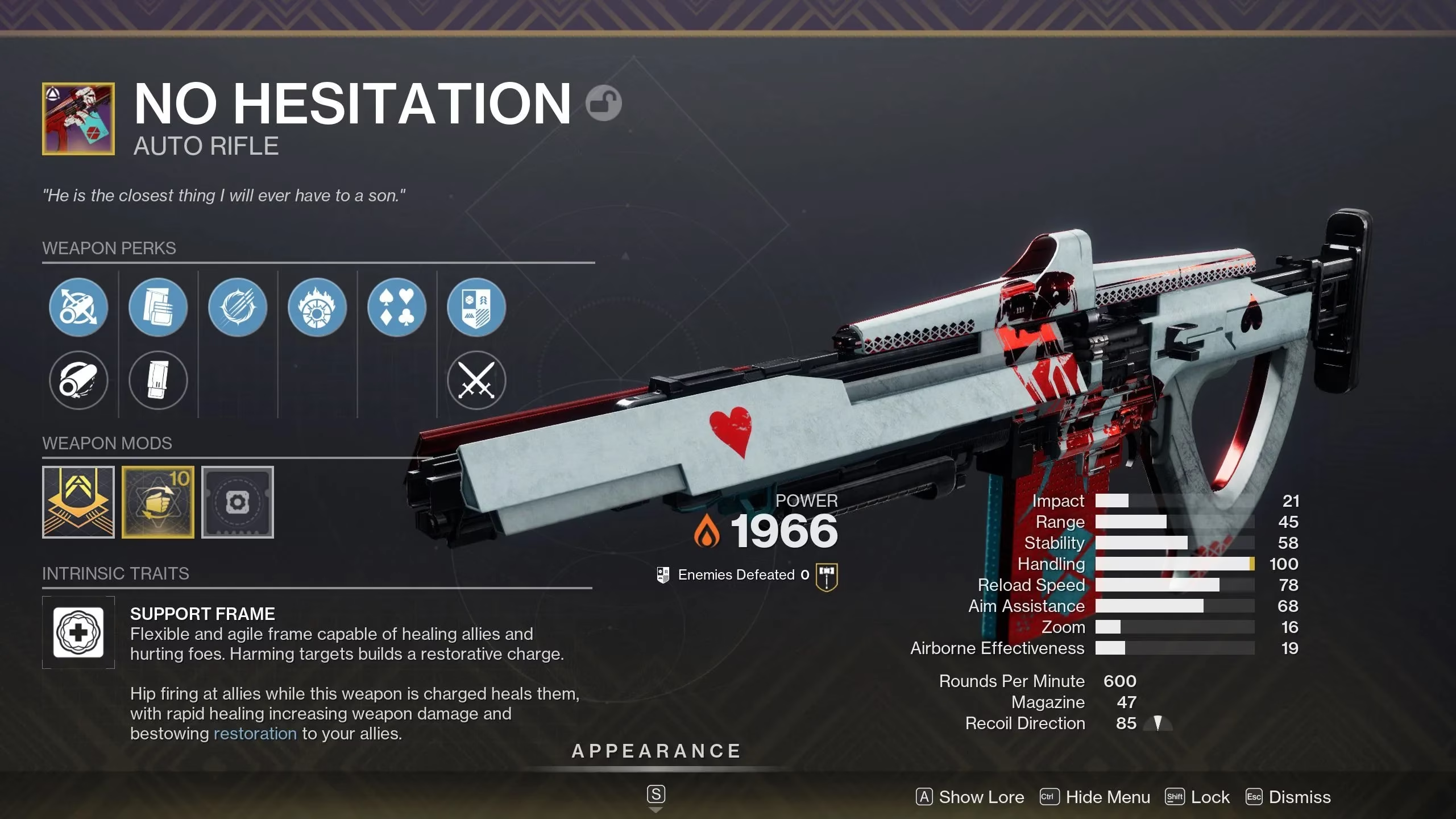
And then, as if to crown this silent revolution, came the tools to truly embrace it. The No Hesitation Auto Rifle arrived—a first-of-its-kind Support Frame that turned bullets into bandages. The first time I fired it at a wounded teammate, the sound was not of impact, but of restoration. A soft chime, a visual shimmer of Light knitting flesh and plate back together. The feedback was visceral and deeply satisfying. It wasn't just healing; it was a conversation. I see you. I've got you. And in return, the weapon would gleam with a buff, a reciprocal gift from the Light for my guardianship. I became a double threat: a source of mending and a font of renewed offense. My friends, fellow Warlocks who had long cherished the support fantasy, were ecstatic. Our planning sessions for Grandmaster Nightfalls transformed. Compositions were no longer just about stacking the highest DPS. Now, we asked: "Who will watch the circles? Who will be our mender?"
-
The Sentinel's New Duty: The Titan, once just a wall, could now be a mobile bastion of healing gunfire.
-
The Healer's Arsenal: Mods like Powerful Friends and weapons with Heal Clip changed from niche picks to core components of a new meta.
-
The End-Game Shift: Raid encounters began to be solved not just with damage phases, but with sustained resilience phases, where a dedicated supporter could keep the team alive through unprecedented punishment.
It has been two years since The Final Shape reshaped our universe, and in that time, this quiet support revolution has only deepened. The Prismatic subclass, for all its flash, found its most profound synergy with this playstyle, allowing hybrids that could sprinkle healing into devastating ability rotations. The community has embraced it, with guides, build-crafting forums, and a new lexicon emerging around the "green role" (a nod to traditional MMO healers). I think back to those early, sightless days of trying to heal, and I feel a profound sense of completion. Destiny 2 finally holds space for the protector, the mender, the vigilant guardian who wins fights not by dealing the final blow, but by ensuring no one falls to throw it. In a game about wielding cosmic power, they gave us the power to care for one another—and made that power visible, tangible, and beautiful. The Witness was defeated with might, but our fireteams are now immortalized through mercy. And that, perhaps, is the most poetic shape of all.