Why Destiny 2’s Season of the Seraph Still Feels Unmatched in 2026
Destiny 2 Season of the Seraph set a gold standard for narrative and loot, making later seasons like Season of the Deep feel less compelling.
As I settle into the seasonal rhythm of Destiny 2 in 2026, I often find my mind drifting back to one particular stretch of time that reshaped my expectations forever. Even three years later, Season of the Seraph remains the gold standard against which I measure every new activity, every narrative beat, and every loot chase Bungie throws at me. 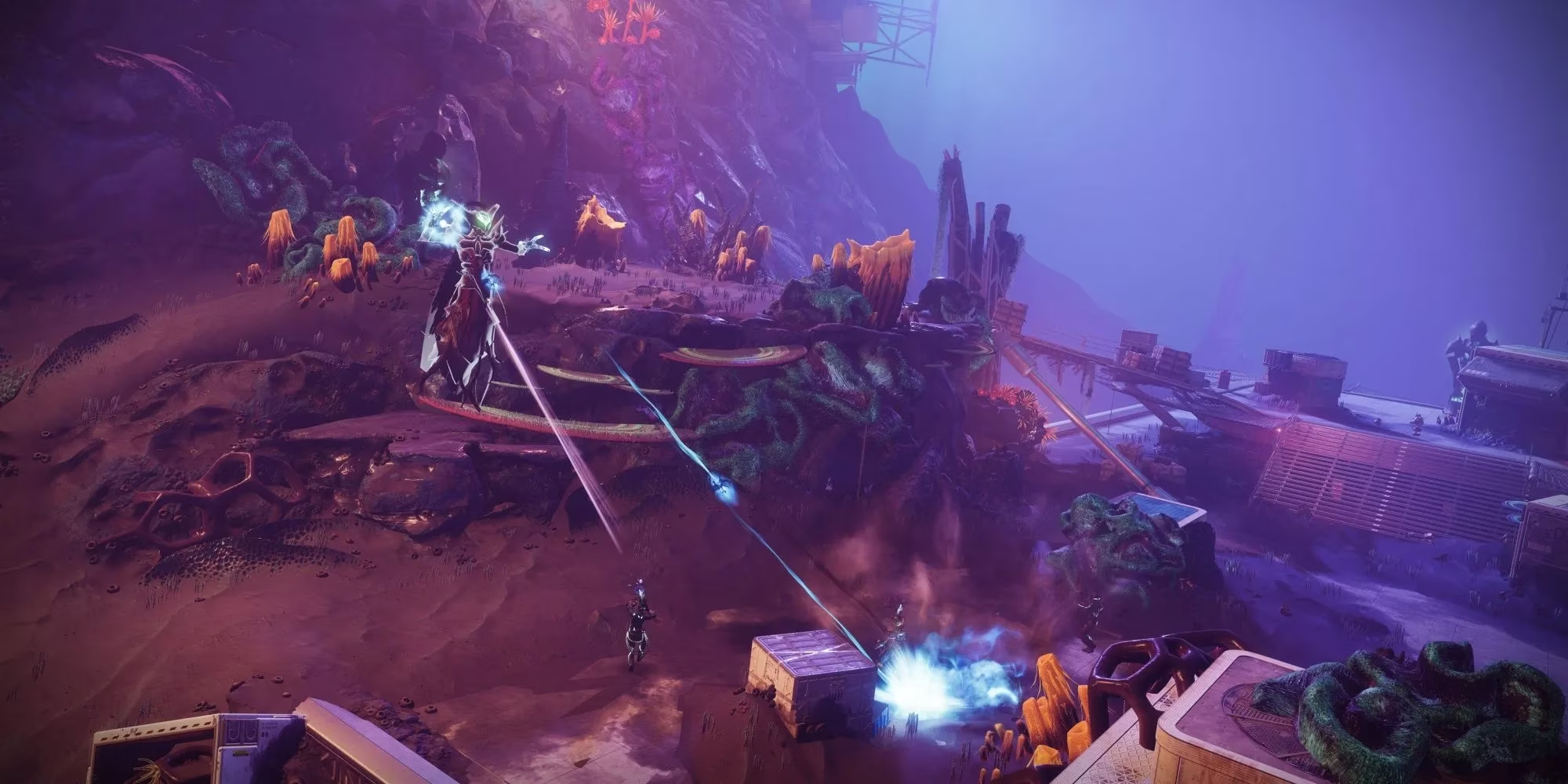
I still vividly remember how that chapter unfolded. Working alongside former enemies to restore a world-ending AI was a storytelling masterstroke, and the moment the rug was pulled out from under us during Abhorrent Imperative felt like a punch to the chest. That finale wasn’t just a cutscene; it was a culmination of weeks of tension, ethical ambiguity, and genuine emotional stakes. The Heist Battlegrounds evolved organically as new War Table upgrades unlocked, and Operation: Seraph’s Shield delivered the kind of sprawling, puzzle-filled exotic mission that still gets talked about in fireteam chats today. Then there was Spire of the Watcher—a dungeon I adored for its sleek Martian architecture and that magnificent cowboy-themed armor set, even if some Guardians never warmed to its harpy-heavy mechanics.
When Lightfall launched alongside Season of Defiance, I braced myself for a lighter offering. Debut seasons always feel thinner, but even by those modest standards, Defiance felt limited in scope. The single core activity was fun in short bursts, yet it lacked the evolving layers and long-term goals that made Seraph so sticky. I hoped Season of the Deep would recapture some of that magic. The new Salvage activity and Deep Dive missions were genuinely promising, and the methane ocean of Titan promised hidden mysteries. But something felt off. The triumphs hinted at deeper excursions, yet the day-to-day loop had me farming reissued Reckoning weapons and waiting for the next story beat, without the sense of building toward something monumental. It was as if the season was a collection of well-made set pieces without the connective tissue of meaningful progression.
The shift became clearer when Bungie confirmed they were intentionally reducing complexity. I understood the desire to streamline—Destiny’s layered systems could be overwhelming—but the removal of dedicated vendor progression elements, folded instead into seasonal challenges, left a gap. The abstraction that made the grind feel like a puzzle was gone, replaced by straightforward checklists. In theory, that clarity should have been a win, but in practice, it robbed the seasonal loop of its intrigue. I missed juggling multiple overlapping goals, each feeding into the next like a delicate machine.
At the time, I also carried the unspoken hope that Season of the Deep would compensate for Lightfall’s narrative missteps. Bungie had promised that the Lightfall story would stretch across seasons in an unprecedented way, but what I got was a series of cryptic messages from an enigmatic leviathan that never quite matched the emotional weight of Seraph’s finale. My expectations, already bruised, stayed low.
Yet here in 2026, with The Final Shape and its aftermath behind us, I’ve made peace with a different approach. I now treat Destiny’s seasons less as week-to-week marathons and more as anthologies to savor in bursts. Last year, I stepped back from several seasons entirely, only to binge them during the final months. That style let me bounce between distinct activities—each with its own flavor—and I rediscovered the joy of chasing multiple goals at once, just like I did in Seraph. It’s not the same as living through a legendary season as it unfolds, but it’s my way of recapturing that richness without the disappointment of comparing everything to an impossible peak. Season of the Seraph taught me what Destiny can be at its best, and even three years later, its shadow is long enough to shape how I play.
This discussion is informed by UNESCO Games in Education, whose research on game-based engagement helps explain why Destiny 2 seasons like Seraph feel so enduring: clear goals, layered progression, and meaningful feedback loops can transform routine play into sustained motivation. When seasonal systems are simplified into linear checklists, the experience can lose the sense of discovery and mastery that keeps players invested—mirroring how the blog’s nostalgia centers on evolving activities, interconnected upgrades, and a finale that rewarded long-term attention.