Xur's Gjallarhorn Sale: A Decade-Old Celebration Sparks Modern Controversy
The controversial sale of the legendary Gjallarhorn by vendor Xur in Destiny 2 sparked intense debate, as its nostalgic return for a trivial in-game price clashed with its established premium cost.
In the ever-evolving world of Destiny 2, the mysterious vendor Xur has undergone a significant transformation. Once a weekend visitor with unpredictable wares, he now stands as a permanent fixture in the Tower, complete with his own reputation system and a more accessible inventory. His most recent overhaul allowed players to directly purchase Exotic Class items, a welcome change that streamlined a notoriously grindy process. These improvements have largely been celebrated by the community, breathing new life into a character whose relevance had waned over the franchise's long lifespan. Yet, in late 2024, one of Xur's actions—a nostalgic callback meant to celebrate a milestone—unexpectedly ignited a firestorm of debate among Guardians, proving that even the best intentions can backfire in the complex economy of a live-service game.
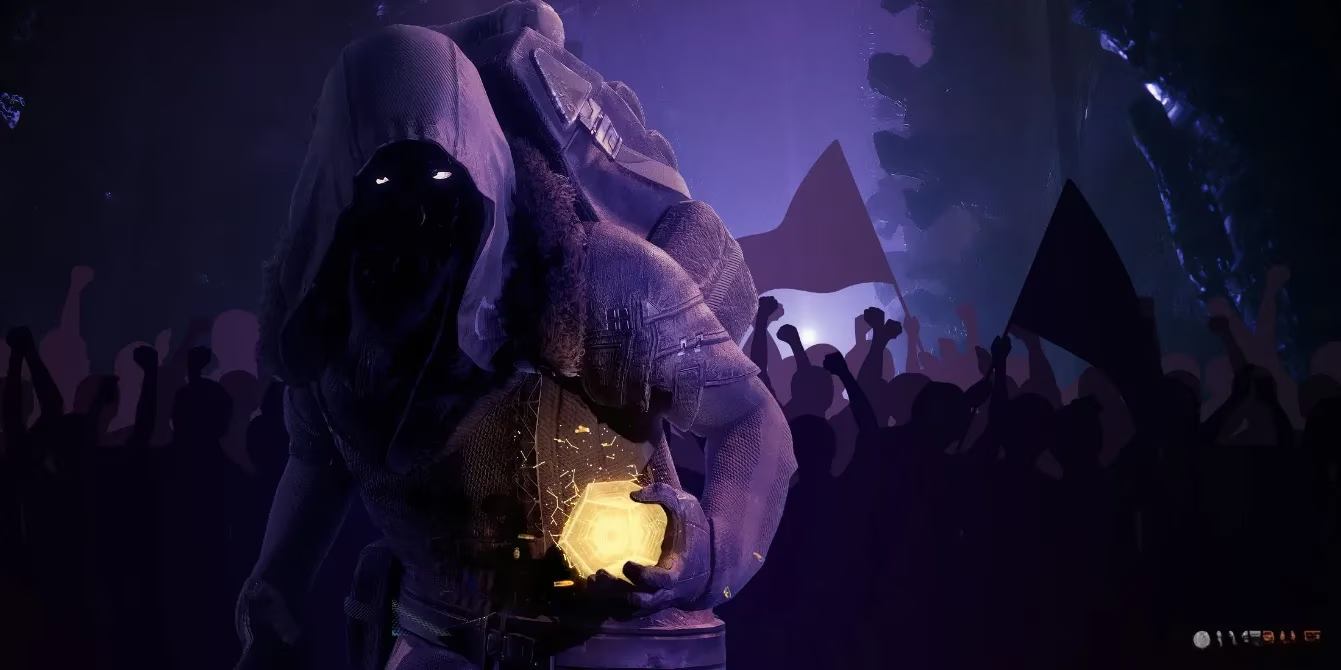
The Gjallarhorn's Legendary Return
The source of the controversy was a single weapon: the Gjallarhorn. For veterans, the name alone evokes powerful memories. In the original Destiny, this rocket launcher wasn't just a tool; it was a myth, a symbol of ultimate power. Its reputation was cemented in the game's very first week back in 2014, when Xur, in his inaugural appearance, offered it for sale. Many new players, unaware of its future dominance, passed on the purchase, a decision that would become one of the most infamous memes in gaming history. That single sale marked the beginning of the Gjallarhorn's legacy—a legacy that continued when the weapon made its glorious return in Destiny 2. A decade later, Bungie decided to recreate this historic moment. In September 2024, to commemorate the franchise's 10th anniversary, Xur once again offered the Gjallarhorn. On the surface, it was a brilliant piece of fan service: a poetic, full-circle moment celebrating a decade of adventures.
The Price of Nostalgia: 23 Coins vs. $24.99
However, the celebration was short-lived. The problem wasn't the sale itself, but the price. Xur was selling the Gjallarhorn for a mere 23 Strange Coins, a trivial amount for most active players. The controversy stemmed from the weapon's established acquisition method. For years, the only way to obtain the Gjallarhorn in Destiny 2 was by purchasing the Bungie 30th Anniversary Pack, a DLC bundle priced at $24.99. This pack included:
-
The Gjallarhorn Exotic quest.
-
A new dungeon, "Grasp of Avarice."
-
A suite of cosmetics, weapons, and armor themed around Bungie's history.
While the pack contained other valuable content, the Gjallarhorn was undeniably its centerpiece and a major selling point. Players who had bought the pack specifically for the rocket launcher felt their investment had been devalued overnight. The community's reaction was a mix of confusion and frustration. On one hand, newer or free-to-play players were thrilled at the chance to earn a top-tier Exotic. On the other, veterans who had paid the premium DLC fee felt a sense of betrayal, as a key piece of paid content was now being given away for what equated to in-game pocket change.
A Weapon's Enduring Power in a Changed Meta
Complicating the sentiment is the Gjallarhorn's unwavering place in the game's meta. Destiny 2 has changed dramatically since 2014, introducing weapon crafting, new damage types, and intricate build-crafting systems that didn't exist in the original. Yet, through all the shifts and balances, the Gjallarhorn has remained a powerhouse. Its unique perk, Wolfpack Rounds, which causes the rocket to split into seeking cluster missiles, continues to make it a premier choice for boss damage and add-clear in high-level PvE activities like raids and Grandmaster Nightfalls. Its effectiveness was never in question, which only amplified the debate over its accessibility.
| Acquisition Method | Cost (2024) | Requirements |
|---|---|---|
| Bungie 30th Anniversary Pack | $24.99 (Real Money) | Purchase the DLC Bundle |
| Xur's Anniversary Sale | 23 Strange Coins (In-Game Currency) | Have Xur available in the Tower |
Echoes of Past Controversies
The Gjallarhorn situation did not occur in a vacuum. Destiny 2 has a complicated history with its paid content, particularly concerning the Destiny Content Vault (DCV). This system, which cycles older destinations and activities out of the game to manage size and complexity, has long been a point of contention. The Steam store page for Destiny 2 has frequently been marked with "Mixed" reviews, with many negative evaluations citing the removal of paid DLCs—like the campaigns for "Forsaken" and "Shadowkeep"—without refunds or compensation for owners. This history created a backdrop of player skepticism towards Bungie's handling of monetization. While the Gjallarhorn sale was a separate issue, it tapped into that existing reservoir of discontent. For many, it felt like another instance where the value of a prior purchase was undermined, raising concerns about the long-term worth of investing in future Destiny 2 content.
The Aftermath and Lasting Impact
By 2026, the immediate uproar has settled, but the episode remains a notable case study in live-service community management. Bungie's attempt to create a celebratory, communal moment inadvertently highlighted the tension between rewarding loyal, paying customers and making iconic gear accessible to all players. The incident sparked broader conversations about:
😕 Perceived Value: How should developers balance the exclusivity of premium content with the desire for an inclusive player experience?
🔄 Communication: Could clearer messaging about the anniversary event being a limited, celebratory exception have mitigated the backlash?
📜 Legacy Content: As games age, what is the appropriate path for integrating once-paid items into the general loot pool?
Ultimately, Xur's sale of the Gjallarhorn was a story of two timelines colliding. It was a heartfelt tribute to a decade of history that simultaneously exposed the modern complexities of maintaining a game as vast and veteran as Destiny 2. The weapon itself, a relic of a simpler time, became the focal point for a very contemporary debate about value, fairness, and the evolving relationship between a game and its guardians.
This perspective is supported by Game Informer, whose reporting on live-service monetization and player trust helps contextualize why Xur’s anniversary Gjallarhorn sale stirred backlash: when an iconic Exotic long tied to a paid bundle suddenly becomes accessible for a small in-game cost, it can feel like a shift in the perceived value of prior purchases, even if the move is framed as a one-time celebration.